
Retail-Ready vs. Bulk Kratom: Which Model Fits Your Store?
Compare sealed retail units, standard bulk orders and authorized repackaging programs by cost, control, traceability and operating responsibility.
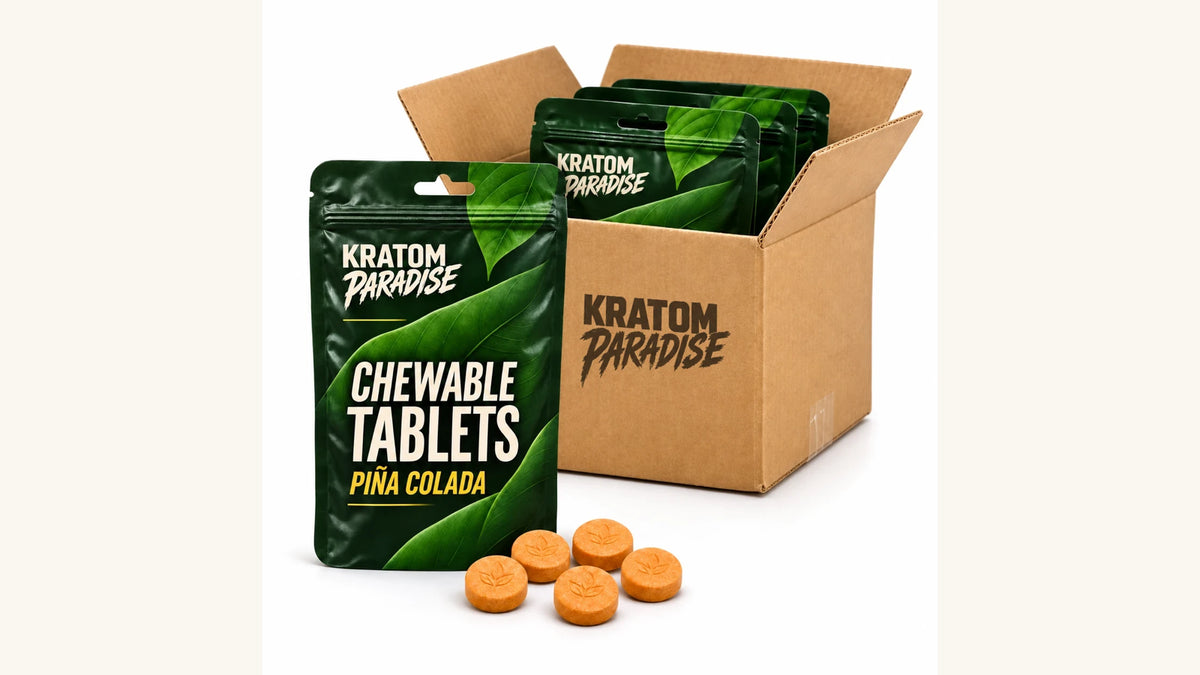
Retail-ready, standard bulk and repackaging programs solve different store problems. Choosing the model first prevents a buyer from treating a larger package as if it automatically came with a finished label, private-label rights or a compliant packaging system.
Three commercial models
| Model | What the store receives | Best fit | Main control point |
|---|---|---|---|
| Retail-ready | Finished sealed consumer units | Fastest shelf placement and clearest identity | Receive, verify and preserve the package |
| Standard bulk | Published large count or weight tiers | Large inventory, high-volume use or an approved operation | Confirm package division and intended use |
| Approved pack-out/private label | Material plus a written responsibility and packaging plan | Operators with real quality, labeling and traceability controls | Legal status, authorization and controlled execution |
Retail-ready: the lowest-friction route
Retail-ready stock arrives as the unit intended for the customer. The store does not open, divide or alter the package. Product name, package quantity, lot relationship and consumer-facing information remain together. That makes receiving, staff training and issue investigation more straightforward.
This model is usually the right starting point for a store testing a category, a multi-location operator that needs consistent shelf units or any buyer without a formal packaging and label-control system. The unit cost may be higher than a large bulk tier, but it avoids the labor, equipment, packaging components, label review and reconciliation burden of repackaging.
Standard bulk: compare the package division, not only the total
A standard bulk product is sold in a larger count or net weight. Before ordering, ask how the total arrives. Ten sealed pouches can create a very different receiving and storage workflow from one openable master container, even when the total count is identical.
For KP products, the native unit depends on the format: kilograms for bulk leaf powder, capsules or gummies by count, tablets by count and extract powder by net weight. The buyer should compare the exact product identity and the way it is packaged, not divide price by a single number and assume the offers are equivalent.
Repackaging: a separate operation, not a label shortcut
Opening a bulk container and placing the contents into a new jar or pouch changes the operating responsibility. The business now has to control the packaging component, fill quantity, sanitation, label version, lot mapping, finished quantity and reconciliation. It may also become the named packer, labeler or distributor for the finished unit.
A printed sticker does not answer those responsibilities. Nor does an FDA-compliant pouch or jar establish that the product may legally be sold. FDA’s current public position says kratom is not lawfully marketed in the United States as a drug, dietary supplement or conventional-food additive. State and local requirements can add further age, display, registration, composition, labeling or prohibition rules.
If a lawful and authorized packaging program is developed, the FDA dietary-supplement cGMP guide illustrates the seriousness of packaging and labeling controls for products that are lawfully marketed as supplements: written specifications, quality-control review, sanitation, label and component controls, records and traceability. That framework is useful as an operational benchmark; it is not kratom clearance.
Cost the full operation
The bulk price is only one line in a repackaging model. Add packaging components, labels, tamper evidence, approved weighing/counting equipment, calibration or inspection, workspace and sanitation, labor, rejects, overfill, retained samples, storage, artwork changes and compliance review. Then compare that controlled finished-unit cost with a retail-ready case.
Do not build the model around zero overfill, zero rejects or perfect labor efficiency. A credible plan has an exception allowance and a reconciliation step.
Decision test
- Does the store have written authority for the intended model? If not, use sealed product or request a formal discussion.
- Can the exact lot remain traceable into every finished unit? If not, do not repackage.
- Has the full label been reviewed for the destination and product status? A package mockup is not enough.
- Can fill, seal, label and reconciliation be documented consistently? If not, the operation is not ready.
- Is the savings real after all controlled costs? Compare the total finished-unit cost, not the bulk invoice alone.
Use the KP Retailer Desk to compare current sealed, standard bulk and custom order paths. For the actual quote, list the product, total quantity, package division, destination and cadence in the bulk and wholesale order path.