
Bulk Kratom Ordering Checklist for Retailers & High-Volume Buyers
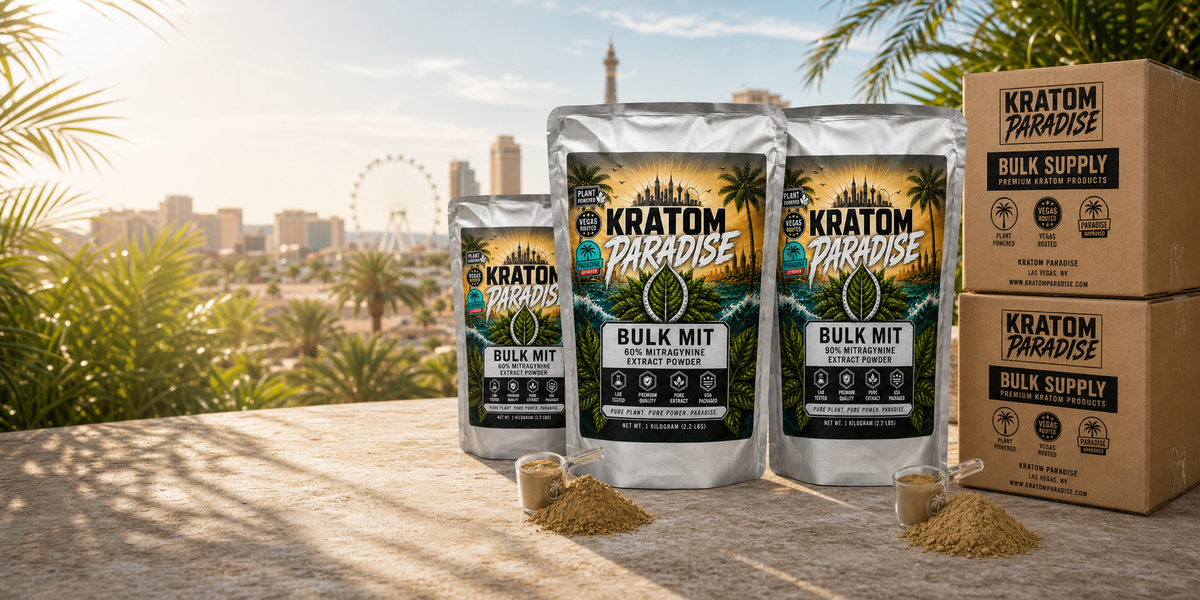
A bulk kratom order is easier to compare when the buyer defines the product, configuration, documents, destination, receiving plan, and timing before comparing totals. Without that structure, two quotes can look similar while describing different formats, package counts, strengths, testing references, or delivery assumptions.
This checklist is built for retailers, purchasing teams, and high-volume buyers who need a repeatable way to evaluate botanical powder, capsules, MIT chewable tablets, or MIT extract powder. It does not create reseller approval or replace a written commercial agreement. It helps make the request precise enough for both sides to identify what is actually being discussed.
1. Define the product lane first
Begin with the broad format. Botanical powder is not the same product as leaf-filled capsules. MIT chewable tablets are not the same product as MIT extract powder. Each lane has different selectors, units, labels, package structures, and document questions. A request for bulk kratom without a format is not yet ready for an accurate comparison.
- Botanical powder: identify the catalog variety and total weight or package plan.
- Leaf-filled capsules: identify the variety, capsule configuration, bottle or bulk count, and total quantity.
- MIT chewable tablets: identify the labeled MIT strength, flavor, and tablet count.
- MIT extract powder: identify the exact product line, flavor or Unflavored (raw), and gram tier.
2. Write every product selector on its own line
A product title often combines several fields. Pull them apart before asking for a quote. For a chewable tablet, write strength, flavor, and count separately. For an extract powder, write product-line label, option, and grams separately. This prevents a flavor name from being mistaken for a strength or a package tier from being mistaken for the total recurring requirement.
Use the exact live catalog language wherever possible. Short internal nicknames may be convenient, but they create avoidable ambiguity when a seller offers both standard and bulk versions. A copied product URL is useful because it anchors the request to a current listing without replacing the written configuration.
3. Separate one-time quantity from recurring cadence
A one-time order and a recurring purchasing plan are different commercial questions even when the first shipment is the same size. State whether the request is one-time, monthly, quarterly, seasonal, or still exploratory. If the cadence is not final, provide a range and label it as an estimate rather than a commitment.
For a mixed request, list every configuration and its quantity. Do not send a single combined weight or tablet total if it hides how the order is divided. The seller needs to know whether 5,000 tablets means one strength and flavor or a mix of several variants.
4. Compare per-unit economics within the same product line
Per-unit comparison is meaningful only when the denominator is the same. Compare cost per tablet within the same labeled strength, or cost per gram within the same extract product line. A lower price per gram on a different product is not automatically a better version of the original request.
Kratom Paradise bulk MIT product pages calculate the current per-tablet or per-gram amount from live variant prices. The smallest listed bulk tier is used as the within-line baseline. That keeps the comparison tied to the actual listing instead of a static savings claim that could become outdated after a catalog change.
5. Decide whether direct checkout or a quote is appropriate
A listed product page is the simplest route when the exact variant is available, the order is a one-time purchase, the destination is clear, and the live total answers the pricing question. A quote is better when the request is recurring, mixed, time-sensitive, requires an availability check, or includes a configuration not fully represented by one listed variant.
A quote request is not an order. It should not be treated as an inventory hold, guaranteed price, delivery promise, credit approval, territory agreement, or permission to resell. Those items require explicit confirmation where applicable.
6. Match documents to the product and batch
Ask what document identifies the product or referenced batch, then match the complete report rather than a cropped result. Record the laboratory sample ID, any batch or lot reference, the report date, and the direct document location. Keep the submitted product label separate from the measured result.
ISO/IEC 17025 accreditation can help evaluate laboratory competence for activities within an accreditation scope. It is not a blanket endorsement of every product, every method, or the seller's upstream sampling. Review the laboratory, scope, methods, sample information, units, and notes as separate parts of the evidence.
The MIT Product Documents & COA Center provides direct PDFs and sample matching for current Kratom Paradise MIT extract lines. The batch and laboratory identifier guide explains how the codes relate.
7. Confirm the ship-to destination before pricing logistics
Kratom rules and carrier limitations can vary by destination and can change. Provide the ship-to state at minimum and a complete business address when requested through a secure ordering or quote channel. Do not assume that a product offered online can be shipped to every location.
Destination review belongs early in the process because freight cost, carrier availability, and eligibility can affect the practical order. It is better to identify a restriction before an invoice or picking plan is created. Current legal questions should be reviewed using authoritative jurisdiction-specific information, not an undated national map.
8. State the desired timing without turning it into a promise
Give the date by which the order is needed and explain whether that date is firm or preferred. Include any receiving blackout dates. The seller can then separate product availability, processing time, and transit estimates. Until confirmed, an estimate should not be represented to downstream customers as a guaranteed arrival date.
Recurring buyers should also state whether consistent shipment dates or flexible replenishment windows matter more. A predictable cadence may help planning, but it does not eliminate the need to reconfirm current inventory and destination eligibility for each order.
9. Prepare a receiving and storage plan
Before a larger order arrives, decide who will receive it, where the original labels will remain attached, how similar variants will be separated, and where documents will be stored. Check product titles, selected variants, counts, and visible package condition against the order record before redistributing anything.
Keep packages closed in a cool, dry place away from prolonged direct light, children, and pets. Use dry handling tools and avoid mixing lots or visually similar configurations. If goods are reorganized internally, preserve the relationship between the original identifier and the new location or container.
10. Define resale and branding questions explicitly
A bulk package does not automatically grant resale authorization, private-label permission, trademark use, or a protected territory. If the intended use involves resale, repackaging, or custom branding, describe that intent and ask what written terms, labels, records, or approvals would be required. Do not infer permissions from the word bulk.
Retailers should also decide who is responsible for customer-facing descriptions, destination controls, complaint handling, and record retention. A purchasing checklist cannot replace the applicable business, labeling, and legal review for the buyer's channel.
11. Evaluate the seller's quality system without relying on a badge
Quality language should be specific enough to verify. Useful questions include how lots are identified, how product and document references are matched, what testing panels are supplied, how changes are recorded, and how a receiving discrepancy is handled. Industry programs such as the American Kratom Association's GMP Standards Program can provide one reference point, but buyers should still inspect the actual documentation relevant to the order.
A long list of logos does not answer whether the current product is correctly identified. Conversely, one laboratory result does not describe the entire operating system. Look for a coherent chain: product identity, lot or sample reference, complete document, current listing, order record, and receiving record.
12. Use a quote worksheet that another person can understand
- Company and contact name
- Exact product URL and full product title
- Format, strength or product line, flavor or option, and package tier
- Quantity for each configuration
- One-time order or expected cadence
- Ship-to state and secure address details when requested
- Desired date and whether it is firm or preferred
- Required batch, sample, or laboratory-document references
- Questions about availability, packaging, receiving, resale, or branding
- Person authorized to approve the final written quote
How to compare two bulk offers
Normalize the offers before choosing between them. Confirm that each describes the same format, product line, configuration, quantity, shipping assumption, document set, and timing. Then compare total cost, per-unit cost, availability, and written terms. If one offer omits a field, mark it unknown rather than assuming it matches the other.
The lowest displayed total may not be the most comparable offer if it excludes freight, represents a different strength, uses a different quantity, or lacks a confirmed configuration. A disciplined comparison makes those differences visible before the order is placed.
Kratom Paradise bulk ordering paths
Browse the complete Bulk Products collection, compare bulk MIT chewable tablets or bulk MIT extract powder, and use the Bulk MIT Buyer's Guide for the live format and tier overview.
When the request is recurring, mixed, or needs an availability review, use the bulk MIT quote form. Include the exact selectors and destination information from this checklist so the inquiry can be evaluated without guessing.
Sources and further reading
This checklist is general purchasing and product-document education. It is not medical, legal, tax, or resale advice and does not create a commercial agreement.