
Kratom Encyclopedia 7-OH
What ND Means on a 7-OH Lab Report
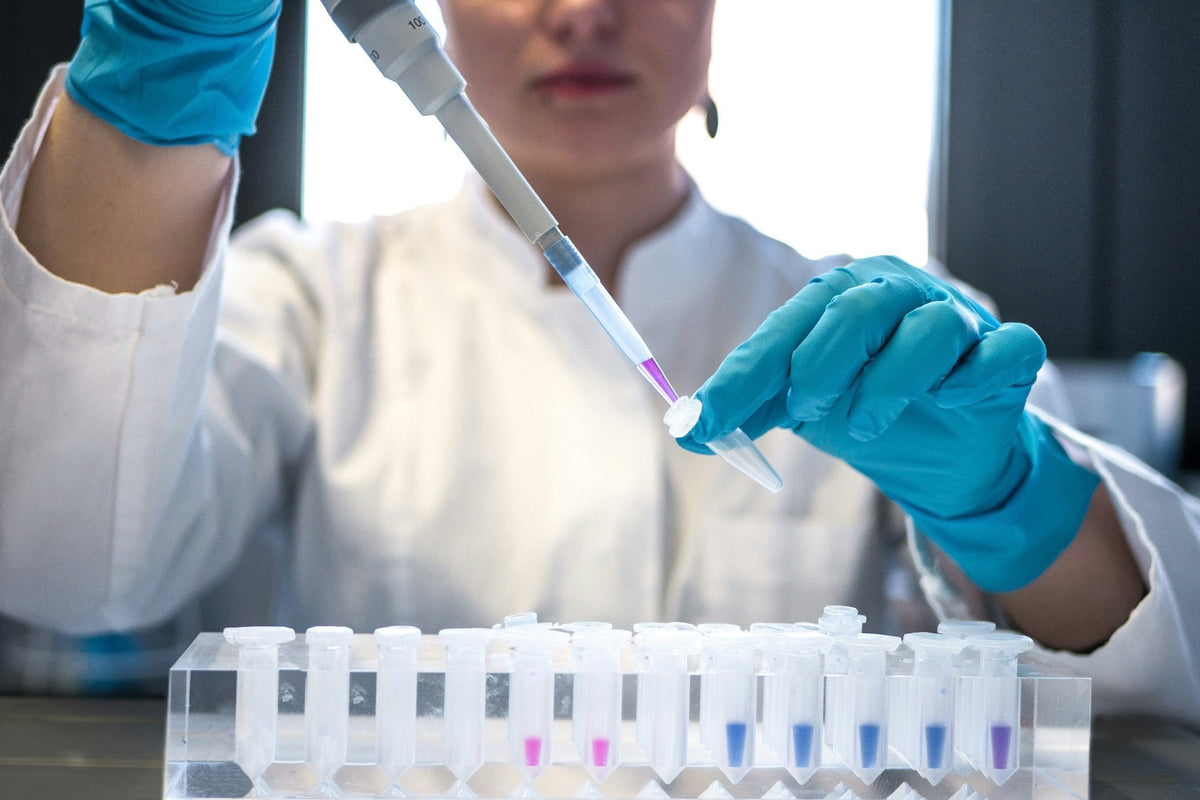
“ND” means the laboratory found no detectable amount of the named analyte under the method and reporting limits. A different method or lower threshold could produce a different finding.
Read four fields together
- Analyte: the compound being measured, such as 7-OH.
- Result: ND, a numeric value, or another laboratory notation.
- LOD: the method's limit of detection, when reported.
- LOQ: the lowest level the method can reliably quantify, when reported.
Find the sample first
Record the product or material name, sample/lot ID, date, units, and whether the laboratory received a source ingredient or a tablet, gummy, powder pouch, or liquid. An ND result for source material cannot automatically be presented as testing of the packaged product.
LOD and LOQ answer different questions
The limit of detection (LOD) describes the smallest concentration that a method can distinguish from a blank or background signal under stated conditions. The limit of quantitation (LOQ, sometimes written LLOQ) marks the lower end of the range where the laboratory considers a numerical result quantitatively reliable. Detection and quantitation are therefore not interchangeable. A laboratory may be able to recognize an analyte signal at a level too low to report as a dependable number, and its report may use a qualifier rather than a concentration for that result.
These limits belong to a method, not to the compound in the abstract. EPA guidance notes that detection terminology and calculations can differ by program, while NIST defines LOD in relation to the blank matrix and the analytical method. Read the report's own definitions and legend before treating “ND,” “<LOQ,” or an estimated value as equivalent.
ND is not the same as zero
ND says that the submitted sample did not produce a reportable detection under the named method and threshold. It does not prove that no molecule of the analyte was present. A defensible summary therefore keeps the threshold attached: “not detected at the laboratory's stated limit” is more precise than “contains zero.” It is also inappropriate to replace ND with an invented fraction of the LOD or LOQ unless the report or a defined data-analysis protocol explicitly instructs that calculation.
Method, matrix, preparation, and units matter
The matrix is the material surrounding the analyte: for example, dry powder, a finished gummy, a tablet, or a liquid. Components of that matrix can affect extraction and instrument response. FDA's method-validation guidance treats selectivity, matrix effects, calibration range, accuracy, precision, dilution integrity, and stability as separate performance questions. Sample mass, preparation, dilution, and the final reporting basis also matter. A value reported in parts per million by mass should not be converted to milligrams per piece unless the piece mass and the report's unit basis are known.
What one ND result can establish
An ND entry can support a narrow statement about the identified analyte, submitted sample, method, and reporting limit. It cannot establish results for a different lot, a later production run, another product format, or analytes the laboratory did not test. It also does not answer questions about clinical effects or individual use. To interpret a report responsibly, match the laboratory sample ID to the seller's lot records, confirm the tested matrix, read the units and limits, and retain the report date with the result.
Kratom Paradise powder example
The current mitragynine (MIT) kratom extract-powder report identifies sample DD00126B(15) and lists 7-OH as not detected under the report's laboratory method. It gives a 0.025ppm LOQ for 7-OH. That is a precise statement about the submitted sample; it is not a claim of mathematical zero or a permanent guarantee for unrelated lots.
Tablet test results are separate
The tablet product page links its supporting laboratory record. Check which material, lot, serving size, and units the laboratory tested. A result for an extract powder sample cannot establish the composition of a finished tablet.
Precise wording for ND
Good: “7-OH was not detected in submitted sample DD00126B(15); the report lists a 0.025ppm LOQ.” Too broad: “This entire product line contains zero 7-OH.”
MIT product documents and COAs
Sources and further reading
- DEA July 1, 2026 announcement
- Federal Register notice for 7-OH above specified thresholds
- Federal Register notice for mitragynine pseudoindoxyl, MGM-15, and MGM-16
- FDA consumer information about enhanced 7-OH products
- FDA and Kratom
- NIST: Limit of Detection
- EPA: Quality Assurance and Quality Control, including LLOQ
- FDA: M10 Bioanalytical Method Validation and Study Sample Analysis