
Kratom & kava guides
Kratom Gummies vs Kava Gummies: Plants, Effects and Flavor
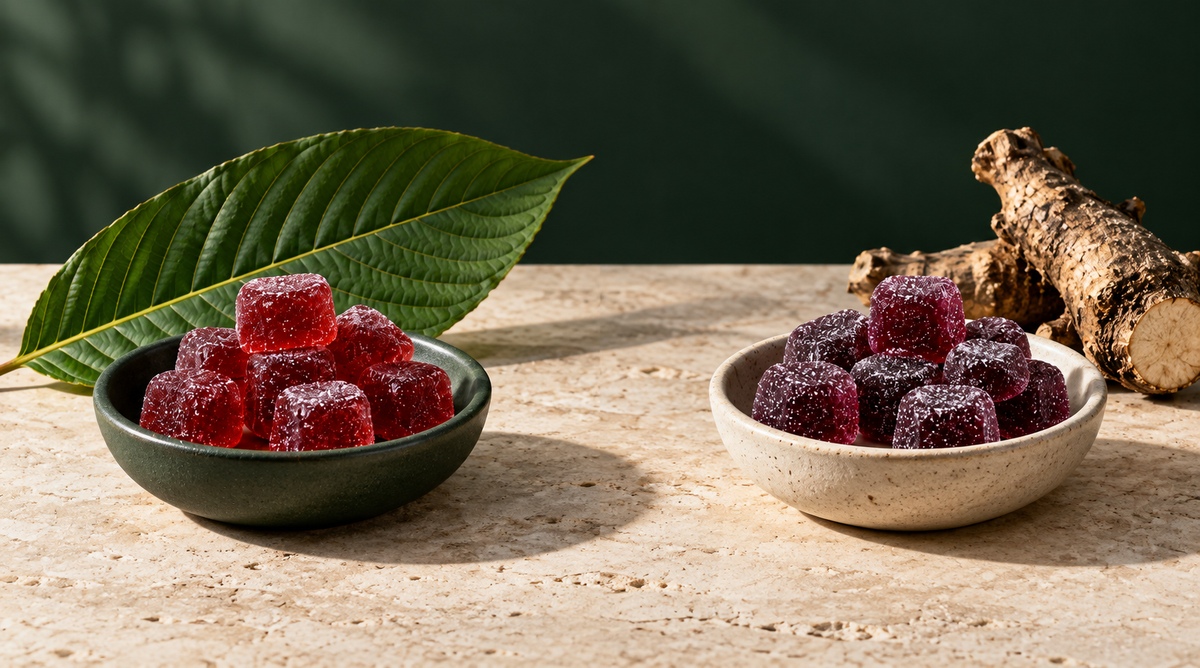
Kratom gummies and kava gummies share a fruit-chew format, but the plants, active compounds, histories, and safety considerations are different. Kratom comes from the leaves of a Southeast Asian tree and is known for mitragynine. Kava is a Pacific plant known for kavalactones; traditional kava drinks are made from its roots and rhizomes.
Kratom: a Southeast Asian leaf
Kratom is Mitragyna speciosa, a tropical tree in the coffee family. Its traditional use is especially well documented in southern Thailand and northern Peninsular Malaysia, where fresh leaves have been chewed or brewed with water. People have chewed or brewed kratom for energy during demanding work, relief from fatigue or pain, relaxation, social use, and opioid withdrawal.
Kratom can increase alertness and energy or produce relaxation and drowsiness. Mitragynine and other alkaloids interact with opioid and additional receptor systems, and concentrated kratom can involve tolerance, dependence, withdrawal, and interactions.
Black Cherry, Green Apple, and Island Punch are fruit-flavored kratom extract gummies containing 50mg of mitragynine per piece.
Kava: a cultivated Pacific plant
Kava is Piper methysticum, probably domesticated in northern Vanuatu about 3,000 years ago and carried to other Pacific islands as stem cuttings. Its roots and rhizomes are worked with water to make an earthy, peppery drink that often produces temporary mouth numbness.
Kava traditions are culturally distinct. Ni-Vanuatu kava, iTaukei Fijian yaqona, Tongan kava and faikava, Samoan ʻava, Native Hawaiian ʻawa, and Pohnpeian sakau have their own names, protocols, and meanings.
People drink kava for muscular ease, calm, physical relaxation, and quiet sociability. Berry Kava Gummies contain kava extract and 50mg total kavalactones per piece. They are not the same as a traditional water-prepared kava drink.
Different compounds, different effects
| Feature | Kratom gummy | Kava gummy |
|---|---|---|
| Plant | Mitragyna speciosa | Piper methysticum |
| Historical center | Thailand, Malaysia, and neighboring parts of Southeast Asia | Northern Vanuatu, followed by wider movement across Oceania |
| Traditional material | Leaves | Roots and rhizomes |
| Defining compounds here | Mitragynine | Kavalactones |
| Traditional use and effects | Fresh-leaf and brewed-leaf use ranges from alertness and energy to relaxation and drowsiness | Traditional kava drinking centers on calm, muscular ease, relaxation, and quiet sociability |
| Kratom Paradise flavors | Black Cherry, Green Apple, Island Punch | Berry |
Different compounds in the same format
Equal milligram amounts do not make mitragynine and total kavalactones equivalent strength measures or predictors of the same effects.
Individual response varies with the product, amount, tolerance, medications, other substances, and physiology.
Safety
Kratom can cause nausea, constipation, dizziness, or drowsiness and can lead to dependence and withdrawal. Kava can cause dizziness, drowsiness, digestive upset, or headache; rare serious liver injury has also been reported in association with kava products. Do not combine either botanical with alcohol, sedatives, opioids, or other substances that impair alertness or breathing. Ask a qualified health professional before use if you take medication, have a medical condition, are pregnant, or are breastfeeding.


