
Kratom & kava guides
Kava Gummies vs Kava Drinks: Taste, Tradition and Format
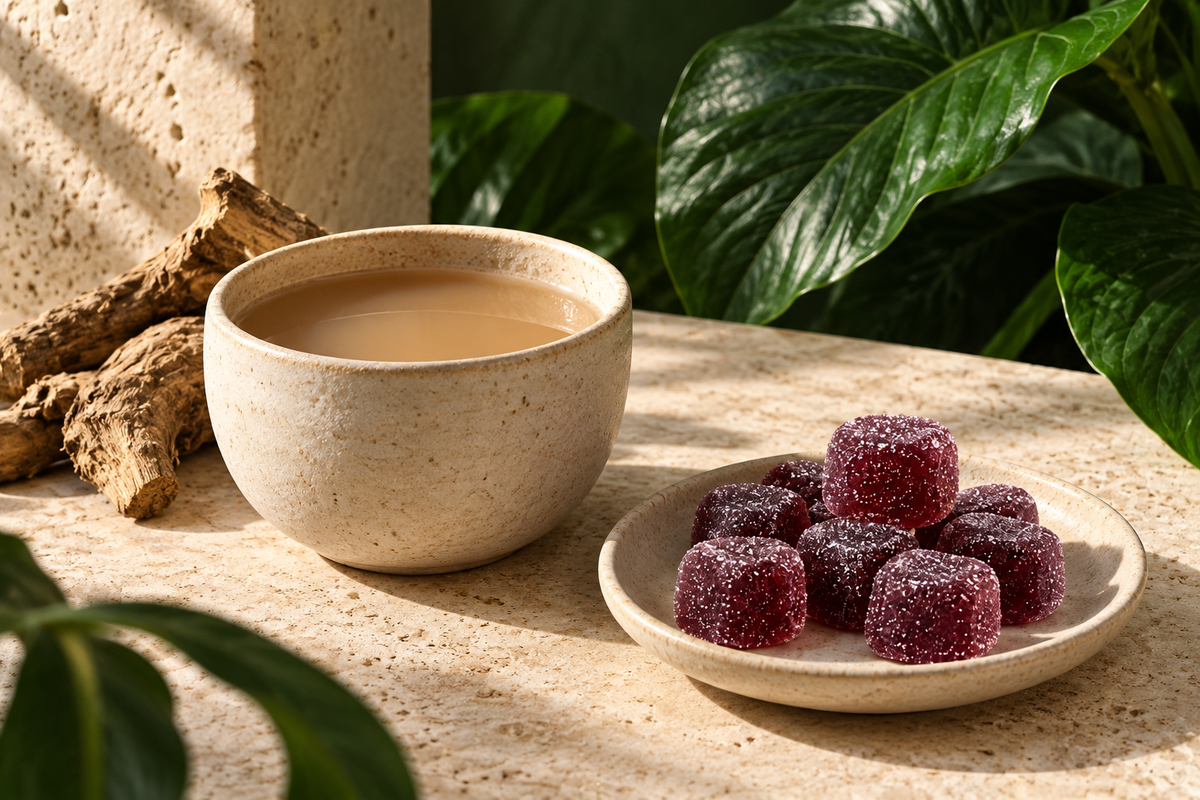
A traditional kava drink and Berry Kava Gummies both begin with Piper methysticum. The drink is made by working roots and rhizomes with water and straining the liquid; Berry Kava combines kava extract with a sweetened, fruit-flavored base.
Traditional kava is earthy and often shared from a bowl. Berry Kava Gummies have a mixed-berry flavor and soft texture. The two differ sharply in preparation, taste, kavalactone information, and cultural meaning.
The drink begins in Vanuatu
Kava was probably domesticated in northern Vanuatu about 3,000 years ago. Because domesticated kava is sterile, it travels through human care: farmers reproduce it from stem cuttings, carry living material to new places, and maintain named cultivars across generations.
From Vanuatu, kava moved through parts of Melanesia, Polynesia, and Micronesia. Different peoples developed their own names and practices. Kava appears in ni-Vanuatu kastom, iTaukei Fijian yaqona and sevusevu, formal Tongan kava and social faikava, Samoan ʻava, Native Hawaiian ʻawa, and Pohnpeian sakau.
These are not interchangeable versions of a single ritual. Serving order, vessels, speech, seating, preparation, and occasion can all carry local meaning. A bowl may belong to chiefly protocol, welcome, reconciliation, ceremony, community governance, or an ordinary evening among friends.
What water-prepared kava is like
Traditional beverage material comes chiefly from the roots and rhizomes of a mature kava plant. Depending on place and occasion, it may be pounded, grated, ground, or kneaded with cool water before straining.
Kava is consumed for muscular ease, calm, physical relaxation, and quiet sociability; dizziness or drowsiness can also occur. The resulting drink is opaque, earthy, bitter, and peppery, with a temporary numbing sensation around the lips and mouth.
There is natural variation from bowl to bowl. Cultivar, plant age, plant part, preparation, water ratio, and the relative proportions of individual kavalactones all influence the finished drink.
Berry Kava flavor and texture
Berry Kava Gummies trade earthy bitterness for mixed-berry flavor and a soft chew. They travel easily and need no mixing or straining.
Side-by-side
| Water-prepared kava | Kava gummy | |
|---|---|---|
| Starting point | Roots and rhizomes | Kava extract in a sweetened fruit chew |
| Preparation | Worked with cool water and strained | No mixing or straining |
| Taste | Earthy, bitter, peppery; mouth numbness is common | Sweet fruit flavor |
| Serving | Liquid served in a cup or bowl | Ready-to-eat mixed-berry chew |
| Strength information | Cultivar, material, preparation, water ratio, and serving volume where known | Total kavalactones per gummy |
Berry Kava Gummies
Kratom Paradise Berry Kava Gummies taste like juicy mixed berries and contain 50mg of total kavalactones per gummy. Sample 2502550-001 lab tested at 50.5mg of total kavalactones per gummy.
Safety in either format
Kava may cause dizziness, drowsiness, digestive upset, or headache. Do not combine it with alcohol, benzodiazepines, or other sedating substances. Talk with a qualified health professional before use if you take medication, have a medical condition, are pregnant, or are breastfeeding. Rare serious liver injury has been reported in association with kava products.
Compare kava gummy prices
Our kava gummy price guide compares pack costs and price per gummy across selected brands, with 50mg of total kavalactones per piece. Berry Kava Gummies offer a soft mixed-berry chew without mixing or straining.
