
Kratom & kava guides
What Are Kavalactones? The Compounds Behind Kava
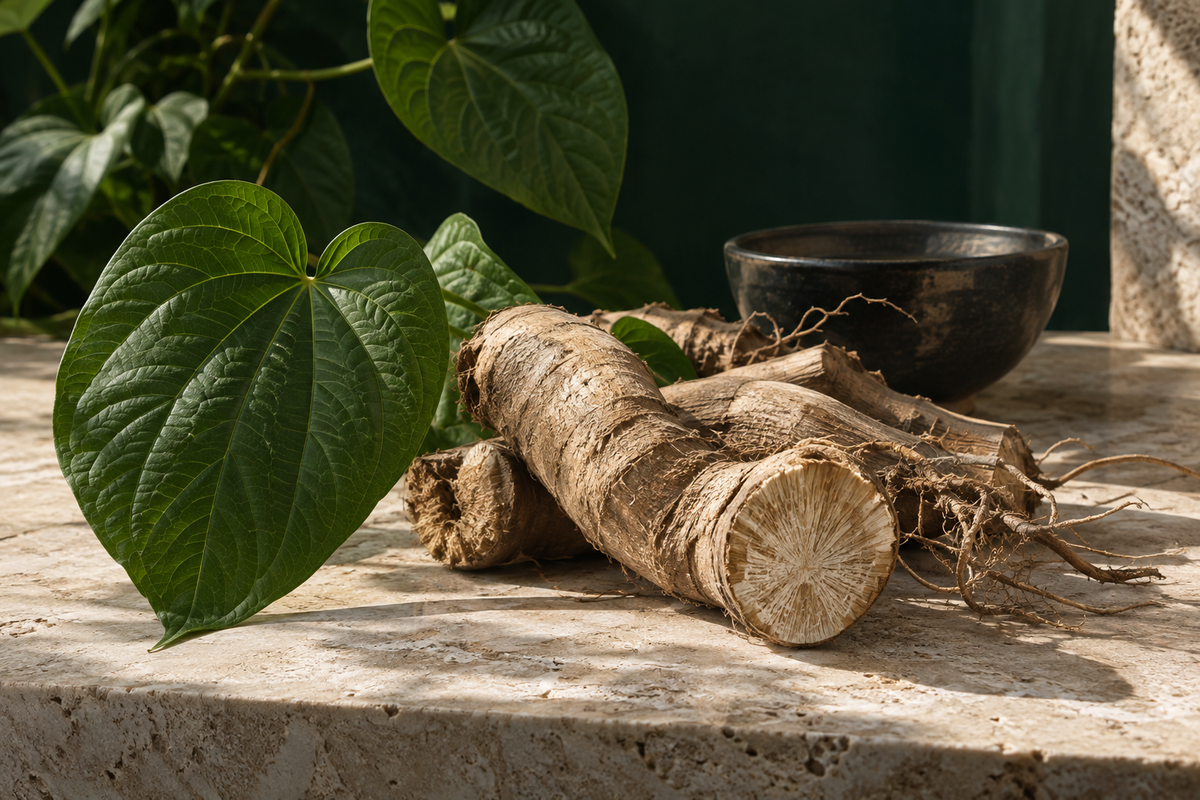
Kava can feel calming, physically relaxing, and quietly social. Kavalactones are the main psychoactive compounds behind those effects, but cultivar, the balance of individual kavalactones, plant part, preparation, amount, and individual physiology all influence how kava feels.
They come from a human-cultivated Pacific plant
Kava was probably domesticated in northern Vanuatu about 3,000 years ago from the wild relative Piper wichmannii. Domesticated kava is sterile, so generations of Pacific farmers have maintained it through stem cuttings. People carried those living plants across parts of Melanesia, Polynesia, and Micronesia and developed locally important cultivars, names, and practices.
Vanuatu still has the greatest known diversity of kava cultivars. That diversity matters chemically as well as culturally: cultivars can contain different proportions of individual kavalactones. Plant age, plant part, growing conditions, harvest, storage, and extraction can influence the profile as well.
The six major kavalactones
Scientists have identified more than a dozen kavalactones. Six account for most of the kavalactone content commonly discussed in commercial and research settings:
- Kawain
- Dihydrokawain
- Methysticin
- Dihydromethysticin
- Yangonin
- Desmethoxyyangonin
A laboratory can measure these compounds individually and add them to report total kavalactones. The exact method matters, so the most useful report shows which compounds were included and whether the result is expressed per gummy, per gram, per serving, or as a percentage.
Profile matters as well as total
Two kava materials can have the same total kavalactone amount and still have different proportions of the six major compounds. Researchers and kava specialists sometimes describe that ordering with a chemotype, a numeric shorthand for the most abundant kavalactones.
Kavalactones interact with several biological systems, including GABA signaling, voltage-gated ion channels, and monoamine pathways. Their balance varies among cultivars and preparations, which is why two products with the same total kavalactones can still feel different.
From roots and rhizomes to gummies
Traditional kava beverages are made by working cleaned roots and rhizomes with cool water and straining the liquid. The result is earthy, bitter, peppery, and often temporarily numbing around the mouth. Cultivar, material, and preparation all influence the bowl.
Berry Kava Gummies contain concentrated kava extract and 50mg of total kavalactones in each mixed-berry chew. The fruit flavor softens the earthy taste, with no mixing or straining.
Six kavalactones totaled 50.5mg per gummy
Sample 2502550-001 contained kawain, dihydrokawain, yangonin, desmethoxyyangonin, dihydromethysticin, and methysticin. The report did not name a kava cultivar.
Safety and interactions
Kava may cause dizziness, drowsiness, digestive upset, or headache. Do not combine it with alcohol, benzodiazepines, or other sedating substances. Talk with a qualified health professional before use if you take medication, have a medical condition, are pregnant, or are breastfeeding. Rare but sometimes serious liver injury has been reported in association with kava products.
