
Kratom & kava guides
What Are Kava Gummies? From Pacific Kava to a Modern Chewable
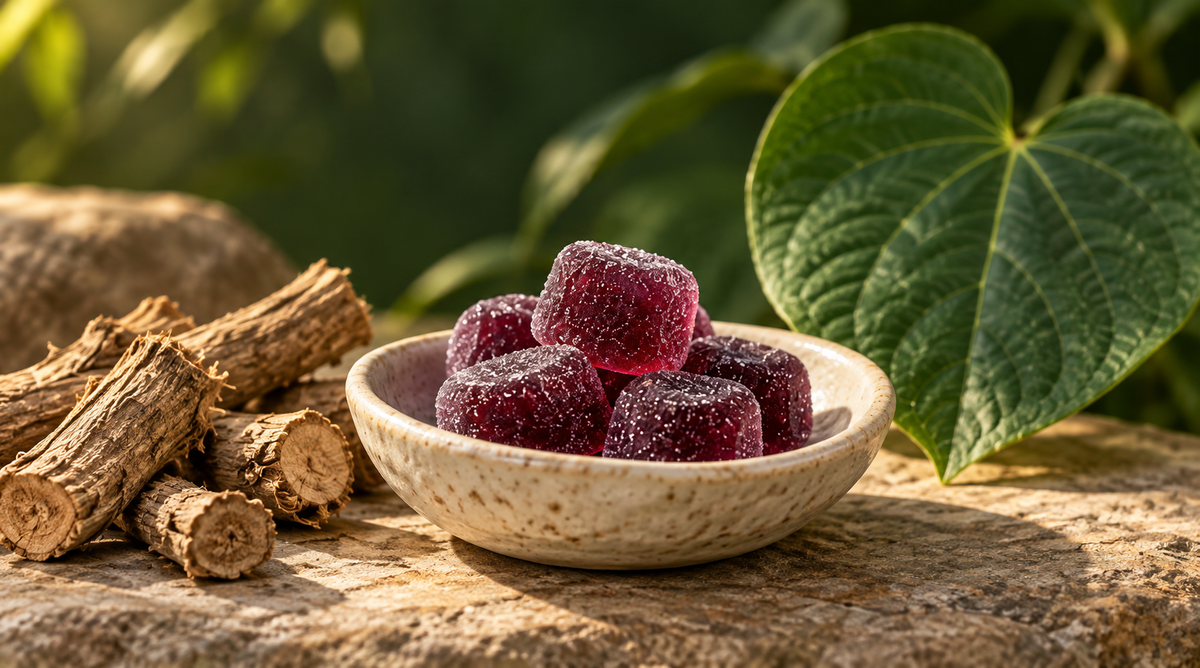
Berry Kava Gummies are sweetened chewables made with kava extract. Each mixed-berry piece contains 50mg of total kavalactones and masks much of kava’s earthy, peppery taste.
Berry Kava Gummies require no mixing or straining. Kava itself was probably domesticated roughly 3,000 years ago in northern Vanuatu, then cultivated, carried between islands, and woven into ceremonial and everyday life by Pacific peoples.
A plant shaped by Pacific people
Kava is Piper methysticum, a member of the pepper family probably domesticated in northern Vanuatu from the wild relative Piper wichmannii. Vanuatu remains the center of kava’s remarkable cultivar diversity. Named cultivars come from islands including Ambae, Maewo, Pentecost, Espiritu Santo, Malekula, Epi, Tanna, Tongoa, and Vanua Lava.
The domesticated plant is sterile, so farmers reproduce it from stem cuttings rather than seed. Its spread across Oceania therefore records human movement and horticultural knowledge. People carried living planting material from island to island, established it in new soils, chose cultivars for local needs, and developed names and customs of their own.
Many cultures, not one interchangeable ritual
In Vanuatu, kava is woven into ni-Vanuatu kastom and contemporary community life. Practices differ among islands, but the nakamal can be a place for drinking, conversation, decision-making, and evening social life.
In Fiji, kava is yaqona. Among iTaukei Fijians, a sevusevu presentation of dried yaqona root may introduce visitors, acknowledge hosts, and open a relationship respectfully. In Tonga, formal chiefly kava ceremonies are distinct from social faikava, where conversation, humor, music, language, and relationships continue around the bowl.
Samoan ʻava ceremony follows recognized roles, oratory, preparation, and serving order. Kānaka Maoli know the plant as ʻawa, one of the important plants carried by Polynesian voyagers to Hawaiʻi. In Pohnpei, sakau has roles in chiefly feasts, welcomes, marriage requests, reconciliation, funerals, and other occasions where relationships and respect are made visible.
These traditions are related through the plant but are not versions of one generic ceremony. They belong first to the ni-Vanuatu, iTaukei Fijian, Tongan, Samoan, Native Hawaiian, Pohnpeian, and other Pacific communities that maintain them.
Why people consume kava
Kava is consumed for muscular ease, calm, physical relaxation, and quiet sociability. In Pacific settings, those effects unfold within social relationships: a bowl may accompany chiefly protocol, welcoming, reconciliation, community decisions, or an ordinary evening with other people.
Cultivar, plant part, preparation, kavalactone profile, amount, other substances, and individual physiology all influence how kava feels. Clinical research on specific kava extracts and anxiety has produced mixed results; those research extracts, traditional water preparations, and retail gummies each have their own composition and context.
The traditional drink
Kava beverages are prepared from the roots and rhizomes of a mature plant. Depending on place and occasion, the cleaned material may be pounded, ground, grated, or kneaded with cool water and then strained. Fresh sakau roots in Pohnpei, for example, are traditionally pounded on stone before the liquid is squeezed and served.
Traditional kava is an opaque, earthy, bitter, often peppery drink that can temporarily numb the lips and mouth. Its preparation, vessels, serving order, and meaning vary by community and occasion.
Kava in a fruit chew
Prefer kava without the preparation? Shop Berry Kava Gummies, or compare kava gummy prices before you buy.
Berry Kava Gummies combine kava extract with sweeteners, fruit flavor, acids, and pectin in a soft chew.
Lab tested at 50.5mg per gummy
Sample 2502550-001 contained kawain, dihydrokawain, yangonin, desmethoxyyangonin, dihydromethysticin, and methysticin.
The result is total kavalactones, not the weight of root or the whole gummy. Read the complete Berry Kava lab report for the individual compound results.
Safety and interactions
Kava may cause dizziness, drowsiness, digestive upset, or headache. Do not combine it with alcohol, benzodiazepines, or other sedating substances, and do not drive if affected. Talk with a qualified health professional before use if you take medication, have a medical condition, are pregnant, or are breastfeeding. Rare but sometimes serious liver injury has been reported in association with kava products.
Sources and further reading
- Kava consumption and sociopolitical life in Oceania
- Lebot and Lévesque: origin and distribution of kava
- Republic of Vanuatu: Kava Act and recognized cultivars
- Te Papa: Kava drinking and Tongan culture
- Te Papa: Samoan tanoa faiʻava and ʻava
- University of the South Pacific: Yaqona and sevusevu
- University of Waikato: Samoan ʻava ceremony
- University of Hawaiʻi: Pacific Food Guide to kava
- Native Hawaiian ʻawa and commercialization
- The current use of sakau in Pohnpei
- NCCIH: Kava usefulness and safety
