
Kratom & kava guides
How to Read Kratom Extract Labels: Powder, Tablets & Gummies
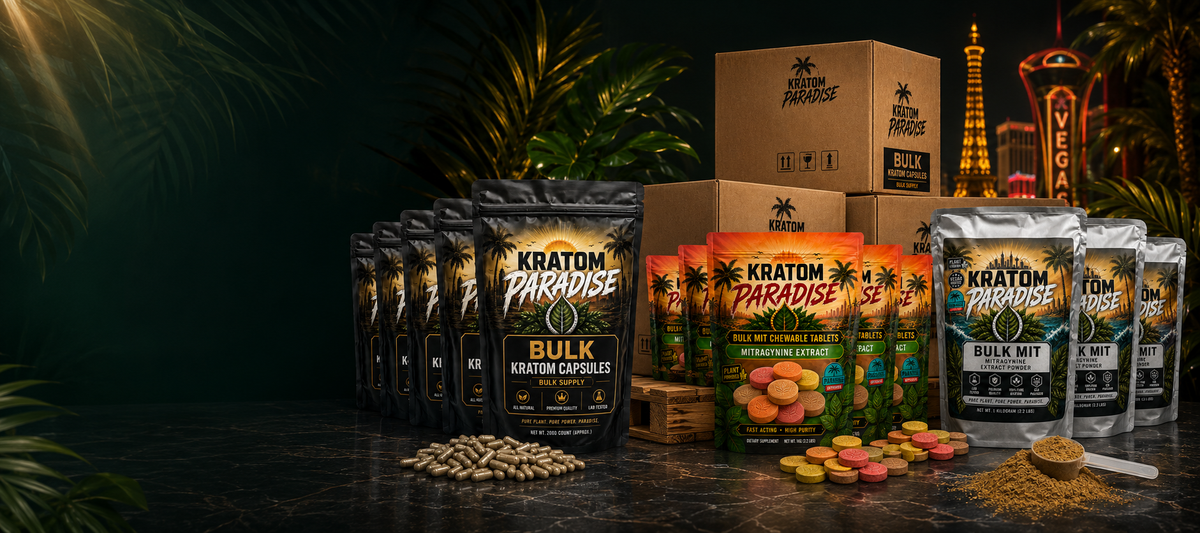
“Kratom extract” is a broad format term, not a complete specification. A useful label comparison identifies the exact product, the amount and unit being reported, the number of units in the package, and the laboratory record tied to that item. Net weight, extract percentage, milligrams per piece, and a COA result are related facts, but they are not interchangeable.
Current Kratom Paradise examples
Use the live listings to compare a weight-based MIT kratom extract powder, pre-portioned MIT tablets, and kratom gummies. Open the matching COA from the selected product instead of relying on a category-level claim.
Kratom extracts come as gummies, liquids, tablets, powders, resins, and enhanced leaf. The fastest way to read any extract label is to identify the format, find the named alkaloid, and read its number with the unit and basis printed beside it.
Four numbers that often appear together
| Field | What it describes | Example |
|---|---|---|
| Count | Pieces or packages | 25 gummies |
| Net weight or volume | Material in the package | 5g powder or 30mL liquid |
| Label amount | A named compound per piece, serving, gram, or package | 50mg mitragynine per gummy |
| Laboratory result | What was measured in the named sample | 52.9mg mitragynine per gummy |
Example 1: a kratom gummy
Black Cherry Kratom Gummies contain 50mg of mitragynine per gummy; sample 2608474-002 lab tested at 52.9mg per gummy.
Black Cherry lab report for the packaged product.
Example 2: an MIT chewable tablet
Mango MIT Chewable Tablets contain 150mg of mitragynine per tablet. Lot M/150/002 lab tested at 146mg mitragynine and 153mg total Mitragyna alkaloids per tablet. Match the COA to the lot on your package.
Example 3: MIT extract powder
MIT 90% Extract Powder is sold by net weight. The 90% figure is the mitragynine specification; sample DD00126B(15) lab tested at 87.01% mitragynine. A 5g package describes the amount of powder, while 87.01% is the mitragynine concentration measured in that sample.
Liquid shots and tinctures
Liquid labels may show bottle volume, servings per container, and an alkaloid amount per serving or bottle. Read milliliters or fluid ounces separately from milligrams of mitragynine. The serving declaration tells you how the manufacturer divides the bottle.
Source material and packaged products
A source-material report describes an ingredient or concentrate before it is made into a later product. A lab report for the packaged product describes a gummy, tablet, liquid, capsule, or other item sent to the laboratory. The sample description on the report tells you which stage was tested.
A quick label check
- Physical format: gummy, tablet, liquid, powder, resin, or enhanced leaf
- Package basis: count, net weight, or fluid volume
- Named compound: mitragynine, 7-hydroxymitragynine, total alkaloids, or another analyte
- Amount basis: per piece, serving, gram, milliliter, or package
- Ingredients and warnings
- Lot or sample reference and laboratory report
Continue with the COA guide for sample IDs, methods, units, and detection limits.