
Four flavors of MIT chewable tablets on a sunlit Las Vegas terrace

MIT Tablets vs Kratom Gummies and Liquid Extract Shots
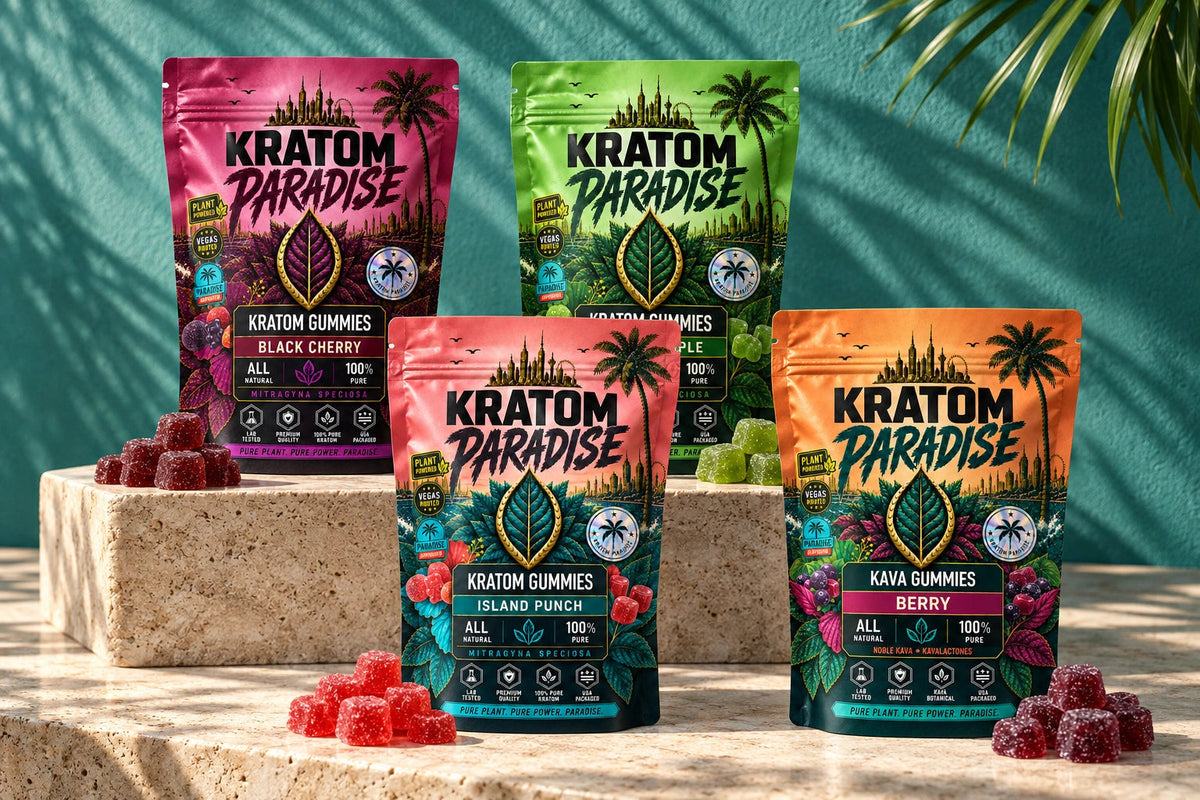
MIT tablets, kratom gummies, and liquid extract shots are all compact extract-oriented formats. Their small packages can hide important differences in label basis, storage, measuring, and recordkeeping.

Kratom Paradise currently offers MIT chewable tablets and does not currently sell kratom gummies or liquid extract shots. This comparison explains why a shopper researching gummies or shots may decide that tablets are the simpler form factor to evaluate. It does not compare effects, recommend an amount, or claim cross-format equivalence.

The short version

Question MIT chewable tablet Kratom gummy Liquid extract shot
Physical form Dry, countable chewable unit Countable confection-style unit Liquid in a small bottle or vial
Primary package record Labeled option, flavor, tablet count Piece count, serving basis, ingredients Bottle volume, serving basis, ingredients
Separate measuring tool No loose powder or dropper Usually no separate tool for a piece Depends on whether the bottle is single- or multi-serving
Common handling issue Count and package integrity Heat, sticking, texture Leakage, residue, resealing
Key label trap Assuming an unstated per-tablet analytical basis Confusing per-piece and per-serving fields Confusing per-bottle and per-serving fields

Why gummies attract searches

Gummies are familiar, flavored, and countable. Those features make the word gummy a natural search term even for shoppers who have not decided what product identity they want. But familiarity can make readers move too quickly past the ingredient list, piece count, serving definition, and storage instructions.

A gummy is not simply a soft tablet. Its confection matrix and heat sensitivity create different packaging considerations. Depending on formulation, pieces can soften or stick. A label may organize its main number per piece or across multiple pieces. The product still needs the same evidence questions as any other extract format.

Why liquid extract shots attract searches

Liquid shots are compact bottled products. Labels may use names such as kratom shot, liquid kratom, extract drink, or liquid extract even when the package structures differ. The serving declaration must show whether the complete bottle is one unit or contains more than one serving.

Liquids avoid loose-powder transfer but introduce fluid-volume fields, ingredients, bottle handling, and possible leakage after opening. A small bottle can carry several numbers: milliliters, fluid ounces, a listed alkaloid amount, servings, and a product-line name. Those numbers should remain separate.

Why tablets can be the easier form factor

Tablets are countable without using a dropper, weighing tool, liquid bottle, or loose-powder scoop. They can be packed in compact containers, checked by unit count, and reordered by the same option, flavor, and count fields. A dry tablet also avoids gummy stickiness and liquid leakage.

  • No fluid-volume field to interpret.
  • No opened liquid bottle to reseal.
  • No loose powder to transfer or weigh as part of ordinary package handling.
  • No confection matrix that can become sticky in heat.
  • A visible, countable inventory for receiving and storage records.
  • Flavor choices without turning the item into a gummy format.

These advantages are narrow and practical. Easier to count does not mean analytically verified per tablet. Dry does not mean universally stable under every storage condition. Convenient does not mean safe, approved, or suitable for a particular purpose.

How current Kratom Paradise MIT tablets are organized

The standard MIT chewable-tablet listing is organized by a labeled 100mg or 200mg MIT option, four flavors, and 5, 10, 25, or 50 count. The bulk listing uses the same option and flavor structure with 100, 500, 1,000, or 5,000 count. The selector fields are kept distinct and no gummy-, shot-, or powder-equivalency chart is provided.

Kratom Paradise has confirmed that current tablets use the 90% MIT-CH source concentrate associated with internal reference 141690. The available report tests that concentrate before tablet manufacturing. It is source-material documentation, not a finished-tablet assay and not a comparison to a gummy or liquid shot.

When powder may be the better format fit

Extract powder remains useful for readers who want a weight-based product line or an unflavored option and are prepared to manage a loose dry material. Kratom Paradise offers both tablets and extract powder because the most convenient format depends on the record and handling system a buyer wants. The store does not claim that every shopper should choose tablets.

Questions to ask before changing formats

  1. Is the new item a tablet, gummy, liquid shot, tincture, powder, capsule, or blend?
  2. Is its primary quantity measured by count, weight, or volume?
  3. Does the main label number apply per unit, per serving, or per package?
  4. Does a linked report test the source ingredient or the finished item?
  5. What ingredients, flavoring, storage, leakage, heat, or resealing issues apply?
  6. Can the selected item be recorded without inventing a conversion from the old format?

Which facts can be verified before ordering?

Confirm the physical form, selectors, count or package quantity, ingredients, available flavors, linked document, and current catalog status. Also note whether ordinary handling involves loose powder, a liquid bottle, or countable units.

Taste, texture, and package preferences are individual. Analytical comparisons require verified product information; the physical format alone does not show that every tablet, gummy, or shot is equivalent.

Continue comparing extract formats

Kratom Paradise does not currently catalog kratom gummies or liquid extract shots. This comparison addresses form factor, labels, and product records only; it does not provide medical, serving, effect, conversion, or legal advice.

Written By : Kratom Paradise Editorial Team