
Kratom & kava guides
Kratom Extract Powder vs Liquid Extract Shots: A Format Guide
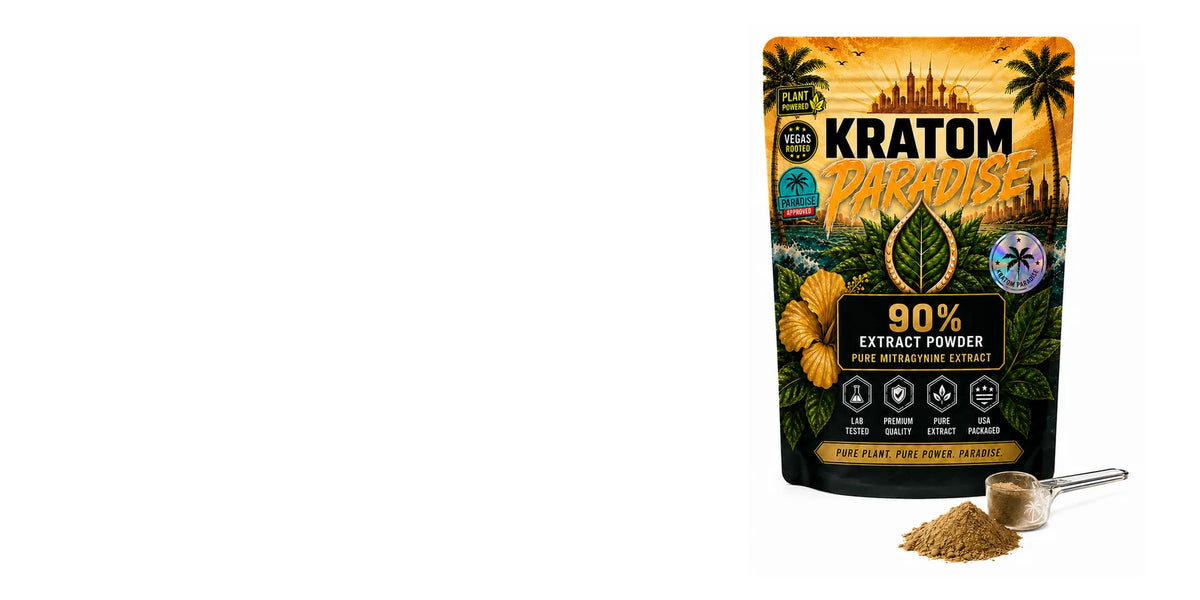
Kratom extract powder is dry and sold by weight; a liquid shot carries concentrated alkaloids in a prefilled bottle. That choice changes portability, ingredients, storage, and label math. Intensity depends on the chemistry and amount, not the container alone.
The better format depends on what matters most: portability, storage, ingredient simplicity, flavor, package waste, or the ability to choose among sizes. Kratom Paradise sells MIT extract powder and MIT chewable tablets; it does not sell liquid extract shots.
Powder and liquid extracts side by side
- Extract powder: dry, lightweight, sold by net weight, and available in several container sizes. Loose powder requires careful handling and a dry storage routine.
- Liquid extract shot: prefilled, portable, and contained in a small bottle. The label may include bottle volume, serving information, sweeteners, flavors, and other liquid ingredients.
- Chewable tablet: firm, dry and easy to carry. There is no bottle to leak or loose powder to transfer.
These formats should not be compared by package size alone. A one-ounce liquid bottle, a one-gram powder jar, and a ten-tablet pouch use different units and may contain different ingredients and alkaloid amounts.
Why some customers prefer extract powder
Dry extract powder is efficient to store and ship. It does not have a liquid bottle that can leak, and it avoids the water, sweeteners, preservatives, and flavor system often used in a ready-to-drink shot. The package can also be much smaller than a bottle holding the same dry ingredient plus liquid.
MIT 90% Extract Powder is intensely bitter, without added flavoring. You measure the loose concentrate yourself.
The tradeoff is handling. Loose powder can spill, cling to tools or containers, and pick up moisture if the package is left open. The customer must keep the original label with the product and close the package fully after handling it.
Why liquid extract shots became popular
A liquid extract shot is easy to recognize and carry. The product is already inside a bottle, so there is no loose powder to transfer. That convenience is the main appeal of the format.
Convenience does not make every shot simple. A liquid label may need to distinguish the volume of the bottle from the amount in one serving. It may also contain a longer ingredient list that includes water, flavors, sweeteners, acids, preservatives, or other botanical ingredients. Two bottles of the same physical size can therefore be very different products.
Shots also create practical drawbacks: the bottle can leak, glass can break, liquid adds shipping weight, and part of the product can remain on the inside of the container. Once opened, a liquid may also have different storage considerations from a sealed dry powder.
Why tablets are easy to carry and store
Chewable MIT tablets are dry, compact, and sold by count, with no bottle of liquid and no loose powder to transfer.
Each Mango MIT chewable contains 150mg of mitragynine, with a firm texture and light mango flavor.
For another direct comparison, see MIT Tablets vs Kratom Gummies and Liquid Extract Shots.
How to read an extract-powder label
First distinguish concentrated mitragynine extract powder from ordinary leaf powder and other extracts. Then read the label name, net weight, flavor, and the matching laboratory document.
A percentage on a laboratory report normally describes a proportion by weight in the submitted sample. It must stay connected to the sample ID, report date, method, and units. It should not be silently rewritten as a per-package or per-serving statement.
Use the MIT Product Documents & COA Center for current test results and How to Read a Kratom Lab Report for percentage, mg/g, ND, LOD, LOQ, and sample matching.
How to read a liquid-shot label
For a shot, separate at least four fields:
- the bottle's total fluid volume;
- the serving size and number of servings;
- the complete ingredient list;
- any alkaloid amount and whether it applies per serving or per bottle.
Do not assume that a large number on the front of the bottle refers to mitragynine, one serving, or the whole container. The surrounding words and units decide what the number means.
Price comparisons need a common basis
Price per bottle can compare two shots only when the bottles contain genuinely comparable products. Price per gram can compare two dry powders only when the product identities and concentration bases are clear. Comparing a bottle price with a powder-jar price is incomplete unless the active ingredient, amount, units, and package basis are also known.
This is not a reason to convert one product into a suggested amount of another. It is a reason to preserve the label's original units and compare like with like.
Storage and package care
Keep extract powder dry, fully closed, and in its original container. Do not combine different product lines, flavors, sizes, or lots in one jar. A liquid shot should remain sealed until opened and should follow the storage directions on its own label. Check bottles for damaged seals, cracks, swelling, or leakage before use.
For broader format and storage guidance, continue with the Kratom Extract Types & Formats Guide and How to Store Kratom.
Which inconvenience would you rather avoid?
Shots avoid measuring loose powder, but add a bottle, liquid weight and possible leakage. Extract powder avoids the liquid, but needs careful measuring and dry handling. Tablets avoid both loose powder and a liquid bottle.
For adult product-format education only. This comparison does not provide dosing, conversion, treatment or medical advice.