
Heavy Metals and Microbes in Kratom: How Lab Testing Works
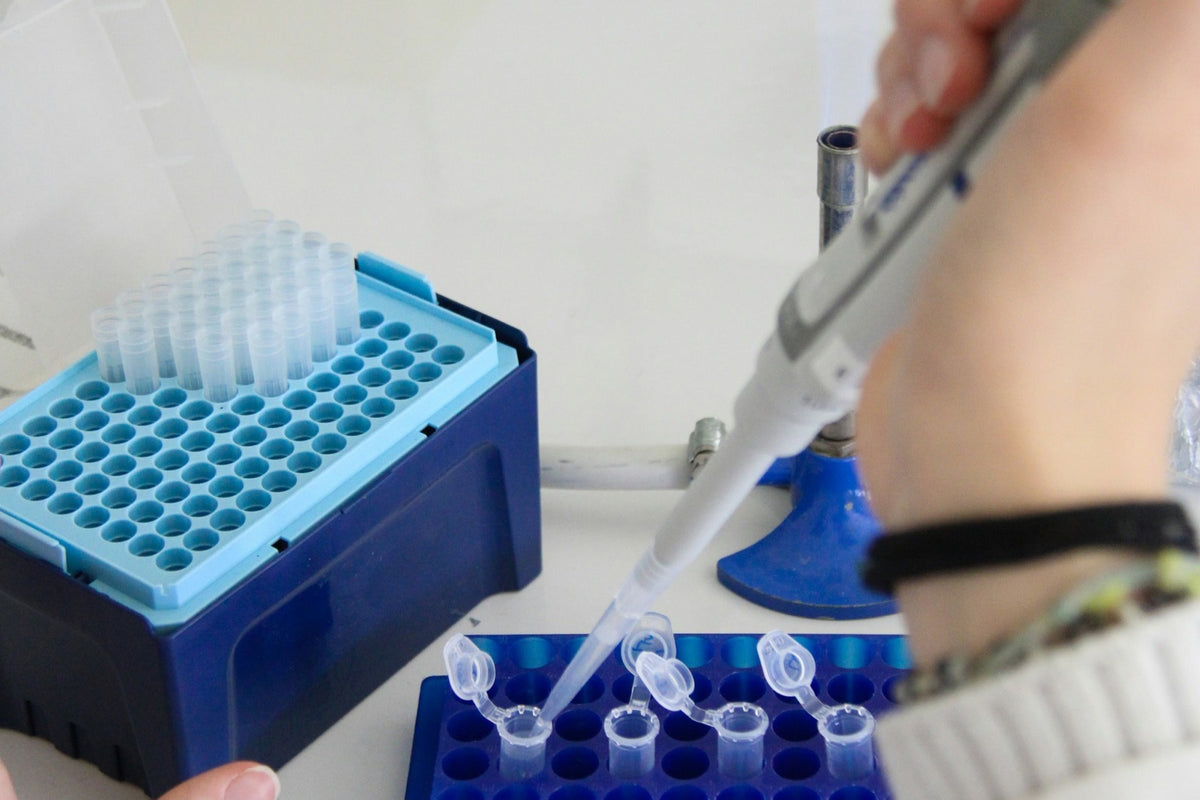
A heavy-metal result and a microbial result answer different laboratory questions. One measures elements in a prepared analytical sample. The other looks for microorganisms or estimates colony counts under defined culture or molecular conditions. They should not be combined into one vague idea of a clean test.
Kratom is a harvested botanical material that can pass through soil, water, handling, drying, milling, transport, storage, and packaging. A laboratory report helps examine a submitted portion of that material. The report remains meaningful only when the sample identity, method, units, limits, and batch connection stay attached to the result.
What contaminants can do to people who consume kratom
The risk from contamination is separate from kratom's desired psychoactive effects. FDA testing of 30 products found lead and nickel at levels that could exceed oral daily-drug exposure limits. FDA noted that long-term heavy-metal exposure can damage the nervous system or kidneys and contribute to anemia, high blood pressure, and increased cancer risk.
Microbial contamination can cause acute illness. In the 2017–2018 Salmonella outbreak linked to kratom, 199 people in 41 states became ill and 50 were hospitalized. Consumers reported ingesting kratom as pills, powder, or tea. That event established a direct path from contaminated product to human illness.
A 2024 toxicology assessment also showed why exposure depends on both contaminant concentration and repeated ingestion. Testing cannot make every future package safe by declaration, but batch-level heavy-metal and microbial results, traceability, sanitation controls, and recall records address risks that appearance and aroma cannot reveal.
Elements and microorganisms require different methods
- Elemental analysis measures substances such as lead, arsenic, cadmium, mercury, nickel, chromium, or other listed elements.
- Microbial enumeration estimates colonies, often as colony-forming units per gram.
- Pathogen detection examines a stated analytical portion for a named organism such as Salmonella.
A panel may include all three categories, but each line still needs its own method and reporting basis. A heading that says microbial or metals is not a substitute for the organism or element name.
How elements can reach a botanical material
Plants grow in soil and take up water and minerals. Elemental content can reflect geology, agricultural inputs, water, dust, processing equipment, storage, or other environmental and handling conditions. The presence of an element does not identify its source by itself. Source investigation requires records and a sampling design that go beyond one concentration result.
Laboratories may report lead, arsenic, cadmium, mercury, nickel, chromium, manganese, or additional elements. The exact list is not universal. It depends on the requested panel, applicable specification, method capability, product matrix, and reporting program.
What FDA found in selected kratom products
FDA published results from testing 30 kratom products from multiple sources. The agency reported significant lead and nickel concentrations in a number of samples and discussed potential exposure using its stated assumptions and reference framework. A later FDA Science Forum summary described a related survey and reported multiple elements across the products examined.
Those findings are evidence that elemental testing is a real quality question for kratom. They do not establish the concentration in an untested package, a different brand, or a later batch. The product name and color family cannot predict an elemental result.
How ICP-MS produces an elemental result
Inductively coupled plasma mass spectrometry is commonly abbreviated ICP-MS. In FDA's Elemental Analysis Manual method for food and related products, an analytical portion is decomposed using acid and microwave-assisted digestion. The prepared solution enters the instrument, where elements are ionized and measured by mass-to-charge behavior. Calibration standards and quality-control checks support the reported concentrations.
The method is sensitive, but sensitivity does not remove the need for representative sampling. A precise measurement of an unrepresentative portion can still describe only that portion. The matrix also matters because different product forms can require different preparation and validation.
Keep the unit attached to the number
Elemental results may appear as ppm, ppb, micrograms per gram, milligrams per kilogram, or another stated concentration. One ppm is numerically equivalent to one microgram per gram. One ppb is numerically equivalent to one nanogram per gram. The report's unit and basis must remain visible when values are compared.
A concentration is not the same as a total amount. Calculating a total amount requires both the measured concentration and the quantity of material represented. A report that lists a concentration cannot by itself determine a person's total exposure from all products, foods, water, and environmental sources.
Microbial testing covers more than one question
Microbial panels can include aerobic plate count, yeast and mold counts, coliforms, specified Escherichia coli groups, Salmonella, or other organisms. Numerical counts and pathogen screens should remain separate. A count estimates organisms that grow under the stated conditions. A pathogen method looks for a particular target in a defined test portion.
FDA's Bacteriological Analytical Manual describes preferred agency procedures for microbiological analysis of foods and cosmetics. Its chapters address sample preparation, aerobic plate counts, Salmonella, yeasts, molds, and other analytical tasks. A commercial laboratory may use a different validated or official method, which should be named on the report.
The 2018 Salmonella outbreak is a dated case study
CDC's final 2018 investigation reported 199 illnesses across 41 states, with several Salmonella types identified. Public-health investigators collected leftover and unopened kratom products, and the investigation found epidemiologic and laboratory evidence linking kratom to the outbreak. CDC also reported that a single common brand or supplier was not identified.
The outbreak shows why pathogen screening, traceability, and recalls matter. It is historical evidence from a defined investigation. It should not be rewritten as a claim that every present kratom product contains Salmonella or that one current negative result describes every package.
Other microorganisms can appear in a laboratory investigation
In a separate 2019 alert, FDA reported that laboratory analysis of one company's raw materials and finished products identified organisms including Klebsiella pneumoniae, Enterobacter species, and an Escherichia species. FDA's finding concerned the named company's tested materials. It illustrates why a panel's organism list matters and why a broad microbial badge can omit important detail.
Presence or absence is not the same as a numerical count
A Salmonella result may be reported as detected or not detected in a specified amount, such as a stated number of grams. An aerobic plate count or yeast-and-mold result may be reported in colony-forming units per gram. These are different result structures.
Not detected means the target was not detected above the method's capability in the tested analytical portion. It does not mean the organism is scientifically impossible anywhere in the full lot. A result below a numerical reporting limit likewise needs the limit and unit to remain attached.
Specifications and reporting limits answer different questions
A reporting limit describes what the method can reliably report under its stated conditions. A specification describes a criterion used to evaluate the result. A pass or fail field reflects the specification applied by the laboratory or customer; it is not a universal scientific category detached from product type, jurisdiction, and intended standard.
FDA guidance for dietary-supplement manufacturing also distinguishes identity, purity, strength, composition, and contaminant specifications. The guidance explains that a supplier certificate relied upon for certain specifications should state the methods, limits, and actual results. That level of detail is more useful than a standalone badge.
Quality controls help show whether the analytical run worked
A laboratory result is produced within an analytical run that may include method blanks, calibration checks, duplicates, fortified samples, reference materials, positive controls, negative controls, or other quality-control preparations. The appropriate controls depend on the method. A blank can reveal contamination introduced during preparation. A fortified sample can help show whether the target is recovered from the product matrix. A positive microbial control can confirm that the procedure can detect the named organism under the test conditions.
These controls do not make the submitted sample representative of an entire lot; sampling and analytical performance are separate questions. They help the laboratory evaluate whether the method behaved as expected for that run. A concise customer-facing report may not display every control result, but the named method, laboratory accreditation or qualification context, and an available underlying record provide more information than an unexplained pass symbol.
Timing and storage remain part of the sample story
The collection date, received date, test date, and report date describe different events. Storage conditions and package integrity between collection and analysis can matter, particularly for microbiological work. A later report can still describe an earlier sample, so the date should be read together with the lot code and the material tested. Retesting a retained sample may answer a different question from testing a newly collected production sample.
Match the contaminant result to the correct sample
Before interpreting a value, use the batch and laboratory-sample guide to identify what the report and package codes describe.
- Confirm the material and physical format.
- Record the submitted sample name and laboratory sample ID.
- Match the batch or lot when the connection is documented.
- Read the element or organism name, method, units, limit, result, and date.
- Distinguish raw material, source extract, and finished product.
- Check whether the report is original, amended, or superseded.
What a report cannot establish by itself
- It cannot prove that the submitted portion represented the full lot unless the sampling record supports that connection.
- It cannot extend automatically to a different lot, later shipment, flavor, or product format.
- It cannot identify the source of an element from concentration alone.
- It cannot turn an unlisted organism or element into a tested analyte.
- It cannot establish universal safety from one panel or one date.
For the wider testing framework, return to Kratom Quality & Lab Testing. For report terminology and units, continue with How to Read a Kratom Lab Report or COA.
Sources and further reading
- FDA: Laboratory Analysis of Kratom Products for Heavy Metals
- FDA Science Forum: Elemental Analysis of Kratom Products Using ICP-MS
- FDA: Elemental Analysis Manual for Food and Related Products
- CDC: 2018 Salmonella Infections Linked to Kratom
- FDA: 2019 Kratom NC Microbial Contamination Alert
- FDA: Bacteriological Analytical Manual
- FDA BAM Chapter 5: Salmonella
- FDA BAM Chapter 3: Aerobic Plate Count
- FDA BAM Chapter 18: Yeasts, Molds and Mycotoxins
- FDA: Dietary Supplement Current Good Manufacturing Practice guidance
This material is provided for laboratory-document and product-quality education. It is not medical advice and does not establish the safety of any individual product.