
Kratom & kava guides
Indonesia’s Kratom Economy: Smallholder Farming, Exports, and Policy
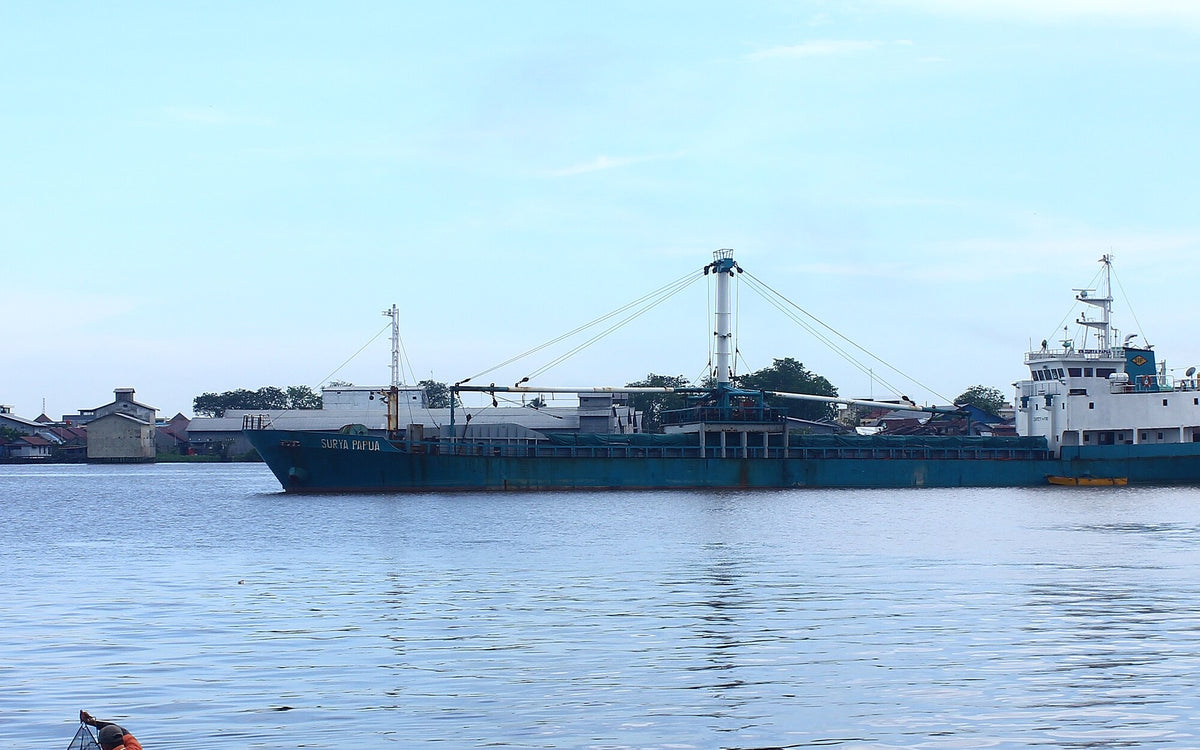
Much of the kratom sold internationally begins with smallholders and processors in Indonesia, especially in West Kalimantan. Farmers may sell fresh leaf, dried material, or partially processed kratom into a chain of village buyers, mills, laboratories, surveyors, registered exporters, freight companies, and overseas importers.
The price of an export shipment is therefore not the income of a farmer. Drying, milling, testing, verification, transport, and the ability to hold an export license all affect who performs the work and who has bargaining power. A 2022 study of 56 kratom-farming households in one Kapuas Hulu village found that kratom supplied 47.88% of average household income in that sample—important local evidence, but not a national income figure.
This is a commercial kratom supply chain, not an ornamental-crop trade. Indonesia’s current rules place fine processing, documented capacity, technical verification, and registered exporters between the grower and the international buyer.
Smallholders sit at the beginning of the commercial chain
Mitragyna speciosa grows naturally in humid parts of Southeast Asia. In Indonesian Borneo, kratom is also cultivated and managed as a cash crop. A household may combine kratom with fishing, rice, rubber, wage work, or other income rather than operating a specialized plantation. The exact mix varies by village and year.
Smallholder production can take several forms. Some growers sell fresh leaves soon after harvest. Others dry leaves or work with local operators that dry and mill them. A producer with access to clean drying space, reliable power, suitable milling equipment, storage, and a dependable buyer occupies a different economic position from a farmer selling wet leaf at the farm gate. The leaf-to-powder processing guide follows the physical material through drying, milling, and handling; the economic question is who performs and gets paid for each step.
A village income study shows importance without proving a national average
One useful field study was published in 2022 by researchers at Universitas Tanjungpura. Using structured interviews, observation, and documentation, the researchers studied 56 household heads who farmed kratom in Ulak Pauk Village, Embaloh Hulu District, Kapuas Hulu. Average reported income from the kratom enterprise was Rp1,864,285 per month and represented 47.88% of total farmer household income in that sample.
The percentage is economically significant: in that village sample, kratom supplied nearly half of household income on average. It is not a 2026 farmgate-price quote, a provincial estimate, or a figure that can be assigned to every grower. The study covered one village, and nominal rupiah amounts should not be carried forward without accounting for time, inflation, price changes, harvest conditions, and differences in household production.
A separate 2022 field project in Jongkong Kiri Hilir examined the village distribution channel, its constraints, and its economic effects. Together, these local studies support a grounded conclusion: access to buyers and the organization of the chain are part of farm economics, not an afterthought. They do not establish how much of today’s overseas retail price reaches a typical farmer.
What determines a smallholder’s return
Several variables can move the value received at the farm or village level:
- Product form: fresh leaf, dried leaf, coarse material, and fine powder carry different labor, equipment, moisture, storage, and compliance burdens.
- Moisture and usable yield: a wet-weight purchase and a dry-weight purchase are different transactions. Drying removes water, and poor drying can create contamination or rejection risk.
- Quality acceptance: foreign matter, microbial contamination, heavy metals, moisture, and the composition criteria used in an export program can affect whether material advances through the chain.
- Distance and transport: moving material from inland production areas to processors, laboratories, warehouses, and ports adds time and cost.
- Market access: a farmer with one local buyer has less negotiating leverage than a producer group or processor able to compare buyers and document material consistently.
- Policy and demand: export permissions, overseas admissibility rules, purchase orders, freight conditions, and warehouse stocks can change demand upstream.
None of those variables guarantees that a higher overseas price produces a proportional farmgate increase. A stronger price can be absorbed by processing, testing, finance, freight, storage, spoilage, regulatory work, or margins elsewhere in the chain. The reverse is also possible: an efficient relationship, fewer rejected lots, and clearer source records can reduce losses and improve the terms available to producers. Measuring the result requires current transaction data, not assumptions.
The chain from grower to exporter has distinct roles
A simplified Indonesian chain can be read as five connected stages:
- Farm production: growers establish or manage trees and harvest leaves.
- Aggregation: collectors or producer groups combine material from multiple growers and arrange transport.
- Processing: leaves are dried, sorted, milled, and stored. The regulated export route centers on finely processed material rather than intact leaf.
- Verification and export authorization: eligible businesses document their role, capacity, sources, product, and shipment; a surveyor verifies required technical criteria.
- International shipment: the exporter, carrier, overseas importer, customs authorities, and any product regulator handle the border transaction.
Real businesses may combine several stages. A registered producer-exporter can process and export, while a registered non-producer exporter works with a producer partner. That distinction is built into Indonesia’s export framework and is more informative than treating every company in the chain as a generic “supplier.”
The current framework grew from the 2024 processing rules
Indonesia’s Ministry of Trade issued Regulation No. 20 of 2024 and Regulation No. 21 of 2024 as a paired structure. Regulation 20 placed intact kratom leaves and cut, crushed, or powdered kratom above 600 microns on the prohibited-export list under the specified tariff lines. Regulation 21 regulated the export of cut, crushed, or powdered material at 600 microns or finer.
Those rules were later amended. Ministry Regulations No. 8 and No. 9 of 2025 updated the prohibited-goods and regulated-export frameworks, and Ministry Regulation No. 5 of 2026 revised the export licensing system again. Under its transition provisions, previously issued producer and non-producer kratom exporter registrations remained valid only until July 1, 2026, and holders were required to apply under the revised system before that date.
The practical direction is clear: whole leaf and coarser material are restricted from export, while eligible fine material enters a controlled route. This is an industrial-policy choice as well as a border rule. Drying, milling, verification, and related work occur before export, keeping more processing activity inside Indonesia. It also raises the importance of mills, laboratories, surveyors, and the businesses able to maintain formal records.
The tariff lines in both regulations are marked with “ex,” meaning kratom occupies specified portions of broader tariff categories. That makes casual trade-data analysis difficult. A total published under a broad 1211.90 heading may include other plants, while a company announcement may cover only one shipment. Reliable claims should identify the period, product definition, and source rather than presenting every number as a complete measure of Indonesia’s kratom exports.
Registered producer and non-producer exporters follow different records
The framework uses two registered-exporter paths: Eksportir Terdaftar Produsen Kratom (ETPK), for producer exporters, and Eksportir Terdaftar Non-Produsen Kratom (ETNPK), for non-producer exporters. Provincial trade offices issue recommendations after field verification. The 2026 amendment retained these categories while requiring existing registrants to transition into the revised licensing process.
For a producer exporter, the record includes the business profile, owned or controlled milling equipment, each mill’s production capacity, the regulated product description, source of raw material, and a self-declaration about the destination of the exported material. A non-producer exporter supplies parallel information about its producer partner, the partner’s equipment and capacity, raw-material origin, the capacity covered by the relationship, and the cooperation contract.
This architecture places processing capacity at the center of export eligibility. It can improve visibility between source material and shipment, but it also means that small farmers generally reach the export market through processors, cooperatives, collectors, or other commercial partners rather than filing an overseas transaction as an isolated grower.
Export rights use a semiannual capacity formula
An export approval is not simply permission to ship an unlimited amount. Regulation 21 ties the permitted quantity to maximum milling capacity multiplied by a periodically set export-right percentage. The Ministry considers information including warehouse supply, unfilled purchase orders, and recent international invoice and purchase-order prices when setting that percentage.
The percentage is established for January–June and July–December periods. Ministry Decision No. 32 of 2026 set it at 22% for January through June 2026. Ministry Decision No. 1522 of 2026 set it at 25% for July through December 2026.
Those percentages should not be described as “Indonesia exports 25% of its kratom crop.” They operate as inputs to an exporter-level capacity calculation under the regulation. Verified mill capacity is not the same thing as planted area, harvested leaf, national production, or actual shipments completed.
Surveyor verification combines composition, contaminants, and moisture
Regulation 21 requires a surveyor report and sets technical criteria for exported powder. The listed fields include mitragynine content, lead, mercury, cadmium, arsenic, Salmonella, Escherichia coli, and moisture. The regulation uses minimum mitragynine thresholds for material categorized as green or white and a different minimum for material categorized as red. Those are administrative export categories in the rule; they should not be expanded into proof that every retail color name identifies a distinct botanical variety.
The presence of an export surveyor report also does not make every downstream package identical. A record must remain connected to the material, lot, and transaction it describes. The heavy-metals and microbial-testing guide explains what contaminant results mean, while the batch and lot guide shows why document-to-product linkage matters after a shipment is divided, processed, blended, or repackaged.
One 2025 shipment provides a dated benchmark, not an annual total
On February 28, 2025, Indonesia’s trade minister marked the release of 13 containers containing 351 metric tons of kratom products valued at US$1.053 million. The Ministry of Trade reported that the powder had undergone irradiation at Oneject Indonesia and sorting by PT Sucofindo before shipment to destinations in the Americas and Europe.
That event is valuable because the date, volume, value, form, and processing context were publicly identified. It should be cited as one shipment release under the new regulated system, not silently converted into a monthly average, a national annual total, or a farmgate price. The shipment value covered an export transaction after multiple processing and compliance steps.
What the policy can and cannot tell us about farmers
The rules show where Indonesia wants value and control to sit: fine processing, documented capacity, source information, technical verification, and formal exporters. They do not publish the share of export value paid to growers. They also do not show whether the cost of compliance is borne by the exporter, passed to processors, or reflected in farmgate terms.
It is reasonable to infer that mills and registered exporters gained a more formal gatekeeping role after the 2024 changes. Whether that improves smallholder income depends on implementation: competition among buyers, producer organization, rejection practices, payment timing, access to drying and transport, and the ability to connect a farmer’s material to accepted lots. National conclusions need national evidence. The available field studies are strongest when used as local snapshots.
Questions that reveal how an Indonesian supply relationship works
- Is the exporting company registered as a producer exporter or a non-producer exporter?
- If it is a non-producer, which processor relationship covers the material?
- How are growers, villages, collectors, incoming lots, and finished export lots identified?
- At which stage are moisture, foreign matter, microbes, heavy metals, and composition checked?
- Who owns the drying and milling equipment, and where does processing occur?
- Which document connects the surveyed export material to the lot received by the overseas buyer?
- Does a cited trade number describe one shipment, one company, one tariff category, or a complete reporting period?
For the border process after a shipment leaves Indonesia, continue with Kratom International Trade: Customs, Documents, and Holds. A clean export file and an import-country admissibility decision are separate parts of the same transaction.
Sources and further reading
- Indonesia Ministry of Trade: Regulation No. 20 of 2024
- Indonesia Ministry of Trade: Regulation No. 21 of 2024
- Indonesia Ministry of Trade: Regulation No. 8 of 2025
- Indonesia Ministry of Trade: Regulation No. 5 of 2026
- Indonesia Ministry of Trade: Decision No. 32 of 2026
- Indonesia Ministry of Trade: Decision No. 1522 of 2026 (official PDF)
- Indonesia Ministry of Trade: February 2025 regulated shipment release
- Indonesia National Research and Innovation Agency: Kratom and local farmers in Kalimantan
- Kusnadi, Muin, and Roslinda (2022): Kratom income and household welfare in Ulak Pauk Village
- Alfiansyah (2022): Kratom-leaf distribution channels in Jongkong Kiri Hilir
- National Institute on Drug Abuse: kratom consumption, effects, and health research