Red, green, and white Kratom Paradise powder pouches grouped in a bright desert landscape

Why Kratom Strain Names Are Catalog Families, Not Guaranteed Outcomes

Prepared and maintained by the Kratom Paradise Editorial Team. Last editorial review: July 13, 2026. Read our editorial standards and sourcing policy.

Kratom catalogs often combine a color word with a geography-style name or the term Maeng Da. Red Bali, Green Malay, White Thai, Yellow Vietnam, and Gold Bali look specific, but the names do not function like a botanical species, a laboratory result, or a guaranteed description of what any person will experience. They are catalog families used to organize botanical leaf products.

That distinction matters because a short product name cannot carry every fact about a pouch or bottle. The format, ingredient, package size or count, batch identity, and any matching laboratory document are more precise fields. This guide explains what the familiar names can tell a shopper, what they cannot establish on their own, and how Kratom Paradise uses them consistently across its current powder and capsule catalog.

Start with the botanical name

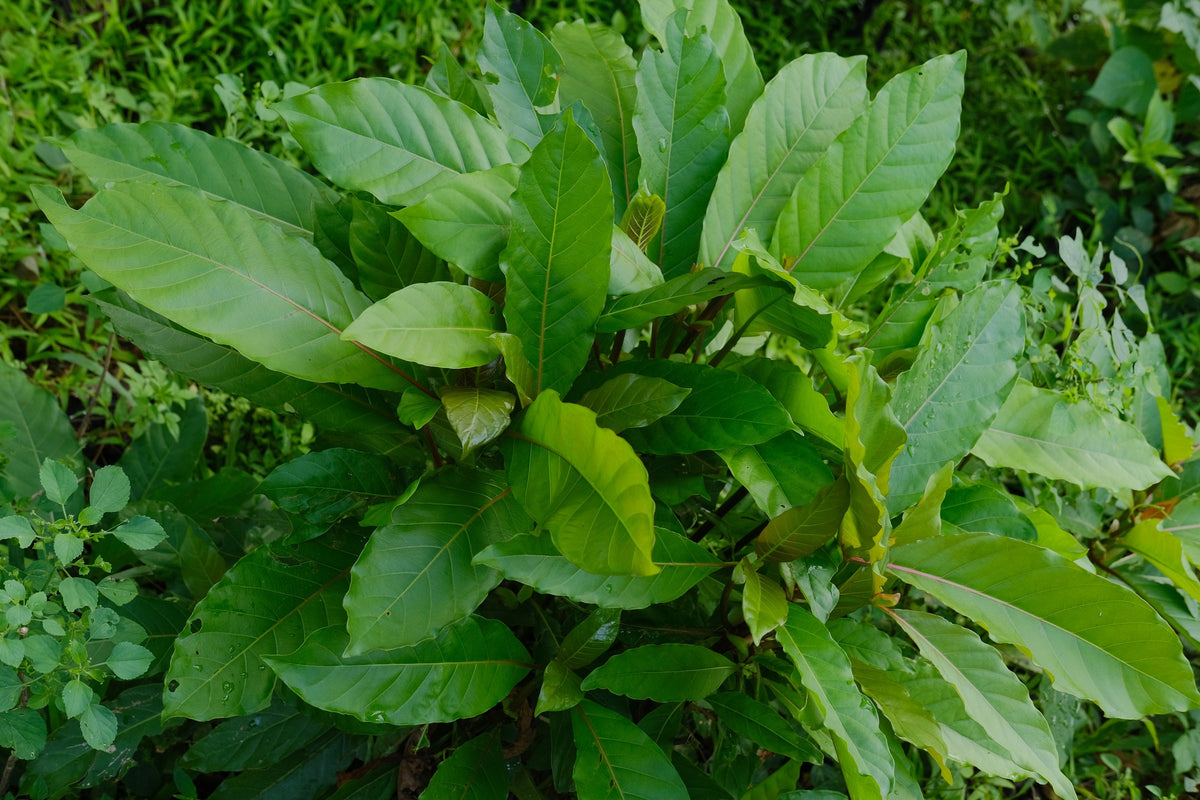
Kratom is the common name for Mitragyna speciosa, a tree in the coffee family. The botanical identity is broader than the retail families printed on packages. Royal Botanic Gardens, Kew records Mitragyna speciosa as the accepted species name and maps its native range across parts of Southeast Asia and New Guinea. Red Bali and Green Maeng Da are not separate species names in that botanical record.

A catalog family can still be useful. It gives a store a stable way to distinguish products, keep matching powder and capsule names together, and help customers return to the same listing. The mistake is treating that navigation label as if it were a complete scientific specification.

What the color words mean in this catalog

Kratom Paradise currently uses red, green, white, yellow, and gold as catalog-family words. They organize product names and packaging. They do not certify one universal leaf-vein category, processing recipe, alkaloid profile, or outcome. Suppliers and stores may use similar color vocabulary differently, which is why the full product listing and label matter more than the color word by itself.

Research also cautions against turning visible color into a chemical shortcut. A Thai field study that examined geography and season found measurable alkaloid variation but reported that leaf-vein color did not reliably explain the geographic differences. Controlled postharvest research has also shown that drying temperature, withering, genotype, and season can affect both appearance and measured chemistry. Color can be observed; it cannot replace batch-specific documentation.

What geography-style names can and cannot establish

Names such as Bali, Borneo, Malay, Thai, and Vietnam are familiar marketplace language. In a catalog, they distinguish one family from another. Unless a listing provides verified sourcing documentation, a geography-style word should not be read as a certificate that a particular package was grown, harvested, or processed in the named place. Kratom Paradise uses these words as established product-family names, not as standalone origin guarantees.

This is also why two products that share a geography-style word should not automatically be treated as identical. Red Bali and Gold Bali are separate catalog entries. White Borneo and Green Borneo are separate entries. The complete name, product format, package size or count, and batch information should remain together when products are compared.

How Maeng Da functions

Maeng Da appears across several color families in the current catalog: Red Maeng Da, Green Maeng Da, White Maeng Da, and Yellow Maeng Da. Here, Maeng Da is part of the established catalog name. It does not create a separate botanical species, prove one standardized manufacturing method, or guarantee that products from unrelated sellers use the term in exactly the same way.

The practical reading is straightforward: treat the entire name as the product identifier. A shopper comparing Green Maeng Da powder with Green Maeng Da capsules is comparing two formats under the same catalog family. The loose powder is selected by pouch weight, while the capsule version is selected by bottle count and uses the listed 500mg leaf-powder fill.

The 12 current Kratom Paradise catalog families

The botanical powder and standard capsule collections currently share the same 12 names. Keeping that set aligned makes it easier to move between formats without inventing a new naming system for each collection.

  • Red Maeng Da, Red Bali, and Red Borneo
  • Green Maeng Da, Green Malay, and Green Borneo
  • White Maeng Da, White Borneo, and White Thai
  • Yellow Maeng Da and Yellow Vietnam
  • Gold Bali

These names identify the listed products. They are not a ranking from strongest to weakest, a medical classification, or a promise that one family is best for a particular goal. Kratom Paradise does not publish effect-based strain rankings or turn the color families into serving, dosage, or conversion advice.

Format comes before family-name comparison

The same catalog name can appear in the Kratom Powder collection and the Kratom Capsules collection, but the package fields are different. Powder is loose milled leaf sold in 250g, 500g, 1kg, and 5kg pouches. Standard capsules contain leaf powder and are sold in 120, 250, 500, and 1,000-count bottles. The family name stays recognizable while the physical format and selector change.

MIT chewable tablets and MIT extract powders use a different label-driven system. They should not be assigned a red, green, white, yellow, or gold identity simply to make the catalog look familiar. The Kratom Product Types Explained guide separates leaf powder, leaf-filled capsules, tablets, extract powders, and bulk options.

What to compare instead of relying on a name alone

Begin with the complete product title and format. Then confirm the pouch weight or bottle count selected, the ingredient description, and the cart line. When a batch or laboratory document is available, match its sample or product identity to the item rather than assuming one report applies to every color family or future batch.

  • Full catalog-family name, not just the color word
  • Powder, capsule, tablet, or extract format
  • Selected pouch weight, capsule count, tablet count, or extract size
  • Ingredient and label fields appropriate to that format
  • Batch or sample identity on any available laboratory document
  • Storage and package condition after delivery

For a closer look at these fields, read How to Read a Kratom Product Label. The Kratom Powder Guide and Kratom Capsules Guide explain the current sizes, counts, and packaging used in each leaf-product lane.

Why batch information remains more specific

Plants vary, and postharvest handling can introduce additional variation. The article From Leaf to Powder explains how harvest, withering, drying, milling, blending, sampling, testing, and packaging form a chain. A catalog name can stay stable across many production lots, while a laboratory report describes the particular sample and methods shown on that document.

That does not make strain-family names useless. It puts them in the correct role. The name helps customers locate and recognize a product family; batch and label fields provide narrower information. Keeping those roles separate produces a clearer catalog and avoids promising more than the name can support.

A simple rule for reading strain names

Read Red, Green, White, Yellow, Gold, Bali, Borneo, Malay, Thai, Vietnam, and Maeng Da as parts of a complete catalog identifier. Do not read one word as a guarantee of origin, chemistry, processing, strength, or personal outcome. Confirm the entire product, format, selector, label, and applicable document.

Kratom Paradise will continue using familiar names where they help organize the botanical catalog, while keeping product-format and label facts explicit. If a catalog family, size, count, or package field changes, the live product page and the label on the purchased unit control over an older educational example.

Sources and further reading

This material is provided for botanical and product-label education. It is not medical, dosing, serving, or legal advice.

Written By : Kratom Paradise Editorial Team