
Kratom & kava guides
Kratom in Thailand: History, Culture, and Current Law
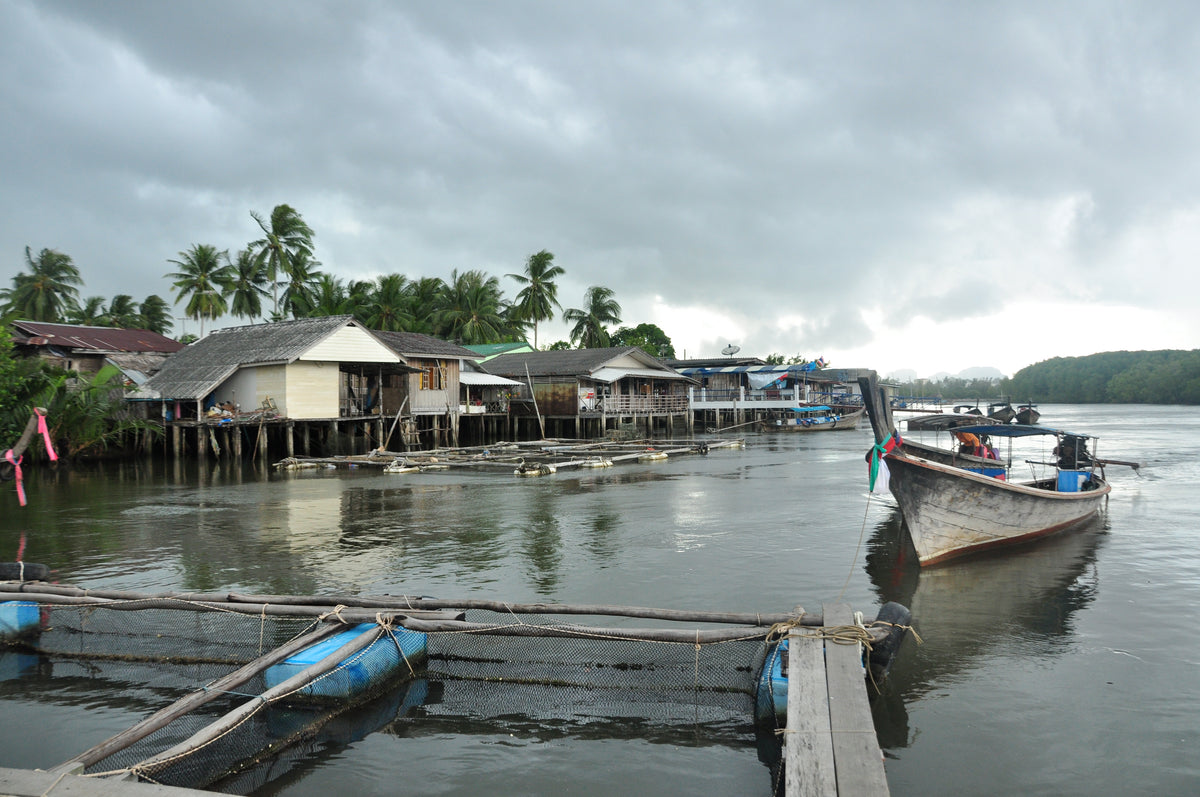
Thailand is central to kratom history. Mitragyna speciosa grows there, fresh leaves have been consumed for generations, and Thai researchers have produced unusually detailed community studies. The country also moved from decades of prohibition to a dedicated Kratom Plant Act.
Krathom in southern Thailand
The Thai name is commonly romanized as kratom or krathom. The tree grows in wet tropical environments, including lowland forest near streams. Fresh-leaf use remained especially visible in the south.
Community research describes people removing the tough central vein and chewing fresh leaves or preparing them with water. Participants used krathom for alertness and endurance during rubber tapping, palm work, rice farming, construction, and other demanding labor. They also used it for relief from fatigue or pain, relaxation, social use, and attempts to manage withdrawal from other substances.
What southern Thai interviews found
A 2013 qualitative study interviewed 34 men aged 31 to 75 in three rural villages. The group included regular, occasional, former, and non-users. Many participants worked in rubber, palm, rice, construction, or related physical occupations.
The interviews recorded preparation, reasons for use, perceived benefits, unwanted effects, and difficulty stopping. The authors found that valued work-related and social effects could coexist with addiction and withdrawal.
Long-term community research
A later program conducted surveys from 2011 through 2015 in 40 southern Thai villages and recruited more than 1,100 men aged 25 and older. Fresh-leaf chewing was the central preparation.
Common health complaints were not more frequent among users in that observational cohort. Dependence and intoxication were still present: higher dependence scores were associated with more intense withdrawal, often beginning within 1 to 12 hours after the last intake. Intoxication was reported by 57.9% of regular users and 29.3% of occasional users.
Blood and clinical-chemistry findings
A 2026 cross-sectional study examined 581 adults from a traditional-use community in Surat Thani province. After adjusting for age, sex, body mass index, smoking, and alcohol use, researchers reported no clinically significant hematological or liver abnormalities associated with chronic kratom use in the studied group. Differences in creatinine and estimated kidney filtration were interpreted as likely related to lower body mass among users.
These findings describe the studied community, its traditional preparations, and the laboratory measures collected. They add useful objective data alongside the interview and cohort research.
Human pharmacokinetics
In 2015, Thai researchers published an early human pharmacokinetic study involving ten healthy men who were regular kratom users. Participants consumed chemically measured kratom tea, and investigators followed mitragynine concentrations over time. The profiles fit a two-compartment model and varied substantially among individuals.
Traditional medical knowledge
Another southern Thai study reviewed six traditional medical scriptures and interviewed or held focus groups with 39 folk healers. Leaves were the plant part most frequently recorded, and decoction was the most common preparation. Written texts and living practitioner knowledge preserved different details about how krathom was understood and used.
From the 1943 Kratom Act to 2021 reform
Thailand enacted a Kratom Act in 1943 and later placed the plant in Category V of its narcotics system. Those controls affected cultivation, possession, sale, and public visibility while families and communities continued to maintain trees and preparation knowledge.
The Narcotic Drugs Act (No. 8) B.E. 2564 removed kratom from Category V effective August 24, 2021. The Office of the Narcotics Control Board described the change as ending kratom offenses under that narcotics framework and opening economic, medical, and research opportunities.
The Kratom Plant Act B.E. 2565
The Kratom Plant Act was published in Thailand's Government Gazette on August 26, 2022 and took effect the next day. It defines the plant by its scientific name. Its definition of kratom leaf includes leaves, boiled leaf water, and leaf extract.
The Act supports cultivation, processing, research, community practice, technology, and economic development while setting health and trade rules.
Age and sales restrictions
Section 24 prohibits sales of kratom leaves or foods containing kratom leaves to people under 18, pregnant women, breastfeeding women, and any additional groups designated by notification. Section 25 restricts sales at educational institutions, dormitories, public parks, zoos, amusement parks, and vending machines.
Mixtures and finished products
The Act prohibits kratom-leaf mixtures containing narcotics, psychotropic substances, drugs, hazardous substances, or other designated ingredients outside narrow medical and research exceptions.
Foods, herbal products, drugs, cosmetics, and other finished products remain subject to their applicable laws. Thai FDA guidance updated in December 2024 explains the authorization conditions for kratom ingredients in foods and certain supplements.
Import and export
Section 10 requires a license to import or export kratom leaves and notification before each shipment. Travelers and businesses should confirm current Thai rules, destination law, product classification, quantity limits, documentation, and carrier policy before crossing a border.
Kratom in Thailand today
Thailand's reform recognizes a long-standing plant practice while retaining rules for sales, mixtures, finished products, advertising, import, and export. The human evidence remains equally mixed: krathom has valued work-related and social uses, real psychoactive effects, and meaningful risks of dependence and withdrawal.
A packaged product using a Thai reference should state its actual growing origin, product format, ingredients, and laboratory information. The cultural history belongs to the people and places documented in Thailand.
Sources and further reading
- Thailand Government Gazette: Kratom Plant Act B.E. 2565 (authoritative Thai text)
- Thailand Office of the Council of State: Kratom Plant Act B.E. 2565 (unofficial English translation)
- Thailand Office of the Narcotics Control Board: Annual Report 2021 and removal from the narcotics list
- Thai FDA Food Division: kratom ingredients in food and authorization conditions
- Saingam et al. (2013): interviews with male villagers in southern Thailand
- Saingam et al. (2023): long-term fresh-leaf use, intoxication, dependence, and withdrawal
- Trakulsrichai et al. (2015): human pharmacokinetics of mitragynine in Thai regular users
- La-up et al. (2026): blood and clinical-chemistry measures in a southern Thai community
- Southern Thai traditional scriptures and folk-healer research
- Royal Botanic Gardens, Kew: accepted identity and native range of Mitragyna speciosa
- “Fishing village, near Krabi town”
- CC BY 2.0
