
Kratom Sustainability: Conservation, Harvesting, and Supply-Chain Evidence
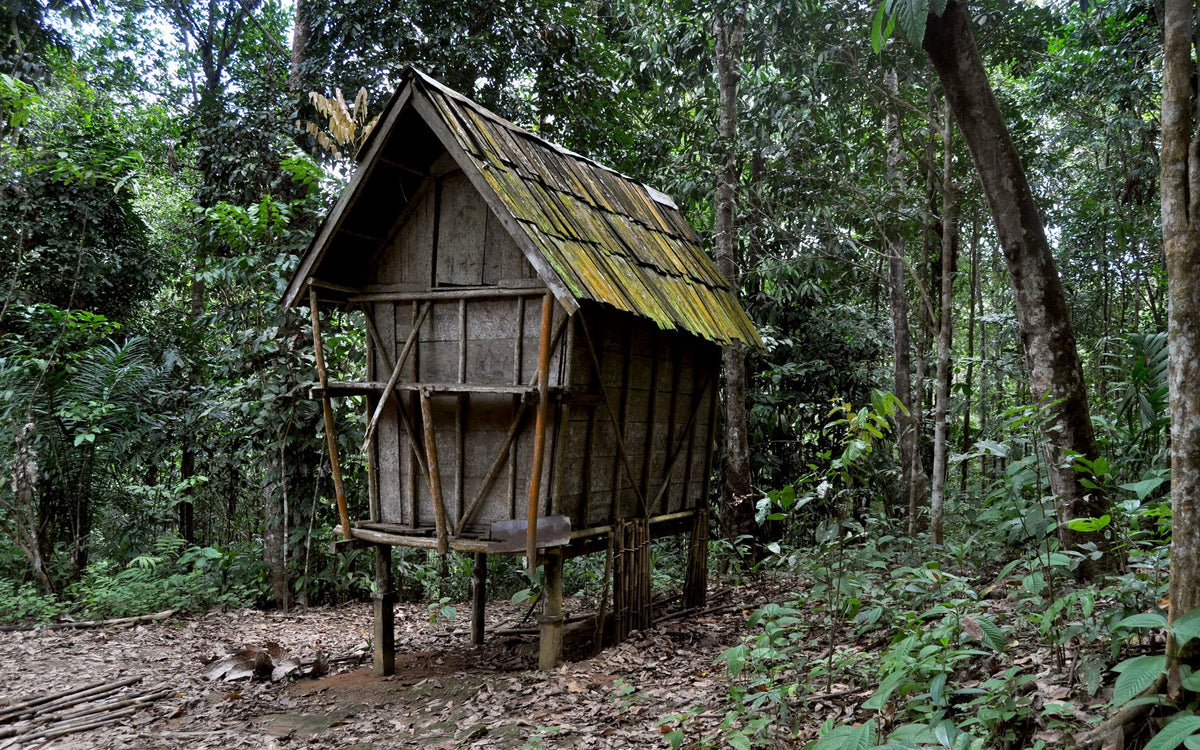
Evidence reviewed: July 15, 2026. Kratom sustainability claims should identify the place, practice, measurement, and time period behind them.
Kratom is harvested because people consume its leaves in powder, capsules, tea, tablets, gummies, liquid products, and extracts. Every one of those formats begins with a living Mitragyna speciosa tree and then moves through harvesting, drying, milling, testing, packaging, and transportation. The environmental and human footprint is created across that entire chain.
A leaf-based product is not automatically sustainable. A credible claim needs evidence about how the source land was used, whether the trees were wild or cultivated, how leaves were harvested, what energy and materials went into processing, how much packaging was used, and who received value from the trade.
Sustainability begins with a traceable source
The first useful question is not whether kratom is “green.” It is where the leaves came from. A source record can identify a farm, managed stand, collection area, cooperative, or supplier group; the species collected; the harvest period; and the party responsible for the material. Lot codes should preserve that connection as leaves are combined, dried, milled, sampled, and packed.
Without that chain, environmental claims become difficult to test. A landscape photograph, a regional-style product name, or the word “natural” cannot show whether land was cleared, whether a harvest plan existed, or whether the finished lot came from the place pictured. The farm-to-shelf kratom supply-chain guide follows the records needed at each handoff.
A wet-tropical tree can grow in several production systems
Royal Botanic Gardens, Kew records Mitragyna speciosa as a tree of the wet tropical biome with a native range from southern Indochina to New Guinea. Commercial leaves can nevertheless come from very different settings: naturally reproducing populations, managed riverside stands, trees retained within mixed farms, home gardens, orchards, or more uniform planted fields.
Those settings are not environmental grades. A cultivated orchard could occupy long-established farmland or recently cleared habitat. A “wild” collection area could be carefully managed or repeatedly overharvested. A mixed tree garden may support several crops and household needs, but its actual land history still matters. Wild-Harvested vs Cultivated Kratom defines the sourcing continuum and the records that can substantiate each term.
Land history matters more than a green canopy
A current tree canopy does not reveal what occupied the parcel before planting. Responsible sourcing records distinguish established farms and home gardens from recent conversion of natural forest, peatland, or other high-value habitat. Useful evidence may include dated land-use maps, parcel records, supplier declarations backed by field checks, geospatial coordinates, and a written prohibition on sourcing from protected areas or recently converted land.
Regional context also matters. Kapuas Hulu in West Kalimantan contains wetlands, river systems, farms, settlements, and protected landscapes. Research on agroforestry in the regency has examined how land-use choices affect household income, biodiversity, and carbon storage. That work modeled illipe-nut and rubber systems rather than kratom, so it cannot supply a kratom footprint number. It does show why claims about any crop in the region must account for the surrounding landscape and the livelihoods connected to it.
Wild collection needs a population-level harvest plan
When leaves are collected from wild or naturally reproducing trees, sustainability depends on more than leaving the trunk standing. Collectors and buyers need to know how many harvestable trees occur in the collection area, whether recruitment is continuing, how much foliage is removed, how often the same trees are revisited, and whether cutting damages branches or neighboring vegetation.
The FairWild Standard provides a useful framework for commercial wild-plant collection. Its ecological principles address maintenance of the collected species and the wider collection area; its social principles address workers, customary rights, and fair arrangements; and its business principles address legal trade and responsible operations. FairWild certification should be claimed only for material within a valid certificate scope, but the framework illustrates the kind of evidence a serious wild-harvest claim requires.
Cultivation can range from home gardens to planted fields
The Food and Agriculture Organization defines agroforestry as the deliberate integration of woody perennials with crops or animals. Home gardens, mixed tree-crop systems, boundary plantings, and orchards can all involve deliberate cultivation, yet their ecological structure differs. Calling all cultivated kratom a “plantation” hides that variety.
Cultivation records can identify the parcel, planting material, neighboring crops, soil management, irrigation, fertilizers or crop-protection inputs, harvest dates, and workers involved. They can also show whether kratom supplies one income stream among several or has displaced food crops and other sources of resilience. The Indonesia kratom farming and export-economics overview examines the smallholder and market side of that chain.
What the limited kratom soil research shows
Kratom-specific field evidence remains local. A 2024 survey in Kapuas Hulu sampled two cultivated fields—one on alluvial mineral soil and one on peat—with five subsamples composited for each field. The measured physicochemical properties supported growth, and the metals analyzed were below the study’s referenced critical thresholds. That is useful evidence about those fields, not a regional certification.
A separate fertility-mapping project in Nanga Mentebah covered about 19.32 hectares of cultivated land. It classified roughly 72.7% of the mapped area as low-fertility and 27.3% as medium-fertility under the study’s criteria. The result makes a practical point: even within one village, planted land is not chemically uniform.
Soil management should therefore be based on field measurements rather than assumptions about “rich tropical soil.” Soil and water can also introduce unwanted elements or microorganisms into leaves. Finished-lot heavy-metal and microbial testing remains necessary because an environmental source story does not replace a contaminant result.
Leaf harvest and tree management need records
Leaf production depends on tree age, season, canopy position, water, light, soil, genetics, and pruning. Harvesting foliage can allow repeated production from a living tree, but that fact alone does not establish a sustainable harvest rate. Repeated heavy defoliation, branch cutting, soil compaction, or poor regeneration can create pressure even when trees are not felled.
A defensible program records the harvest method, the interval between harvests, the portion of foliage removed, tree condition, regeneration, and any mortality or replacement. It also reviews the practice over time. A one-day inspection cannot show whether the stand remains productive and ecologically stable across several harvest cycles.
Farmer and collector livelihoods are part of the footprint
Sustainability has a human side. In a 2022 study of 56 households in Ulak Pauk Village, Kapuas Hulu, kratom income averaged 47.88% of total farmer income in the surveyed sample. The number belongs to one village and study period, but it shows that abrupt price changes, rejected shipments, delayed payment, or unstable buyer requirements can affect household finances.
Responsible purchasing records can address agreed pricing, grading rules, payment timing, rejected material, worker protections, land and customary rights, and access to complaints or remedy. Long-term buying relationships may support investment in better drying surfaces, covered storage, field records, and testing. A sustainability claim that measures packaging while ignoring collectors and farmers is incomplete.
Drying and milling carry energy and contamination costs
Fresh leaves contain water and must be dried before stable powder can be produced. Drying may use ambient air, solar exposure, fans, dehumidification, heated equipment, or a combination. The footprint changes with local humidity, equipment efficiency, energy source, drying time, facility design, and the amount of material that must be reprocessed or discarded.
Efficiency cannot come at the expense of sanitation. Leaves dried on contaminated surfaces, exposed to animals, or stored while still too moist can create losses and quality problems. Covered food-contact surfaces, controlled airflow, cleaning records, moisture targets, and segregated storage can reduce both contamination risk and wasted product. The physical steps appear in From Leaf to Powder: How Kratom Is Processed.
Testing can prevent larger downstream waste
Botanical identity, microbial, heavy-metal, and chemistry tests require samples, materials, instruments, and energy. They can also prevent a nonconforming lot from being blended, packed, and shipped across an ocean before a problem is found. Sampling early enough to make a meaningful decision reduces the packaging and freight attached to unusable material.
A laboratory result should be linked to the correct lot and method. Rejected material should have a documented disposition rather than quietly re-entering the chain under a different code. The kratom product-quality and laboratory-testing overview explains where testing belongs in that system.
Packaging claims need a measurable comparison
Packaging protects kratom from moisture, contamination, damage, and mix-ups. Too little protection can cause product loss; unnecessary layers create material waste. The U.S. Environmental Protection Agency places source reduction and reuse above recycling in its non-hazardous materials hierarchy and lists reducing packaging and lightweighting among source-reduction strategies.
That makes specific measurements more useful than symbols or earth-tone colors. A business can document package weight, resin or paper type, recycled-content percentage, number of components, fill efficiency, and the exact prior package used as a baseline. Local recycling acceptance must be checked rather than inferred from a generic recyclable symbol.
The Federal Trade Commission’s Green Guides warn against broad, unqualified claims such as “green” and “eco-friendly.” A reduction claim should state what changed, by how much, and compared with what. A plant image on a pouch is design; it is not environmental evidence.
Freight comparisons require the full route
International kratom trade can involve collection transport, consolidation, movement to a processor or port, ocean or air freight, customs handling, warehousing, and parcel delivery. Distance alone is an incomplete comparison. Mode, shipment weight, load efficiency, refrigeration needs, failed deliveries, and expedited air shipments can materially change the result.
Powder, capsules, tablets, liquids, and extracts also have different ingredient, processing, container, and shipping profiles. Concentration may reduce the mass of botanical material in a package while adding extraction steps and other ingredients. A format should not be declared environmentally superior without a defined life-cycle comparison using equivalent functional units.
A practical evidence checklist
- Species and source: Mitragyna speciosa, supplier identity, site or collection area, and harvest period.
- Land: prior land use, parcel status, protected-area exclusions, and evidence against recent habitat conversion.
- Harvest: wild-population assessment or cultivation records, harvest method, frequency, regeneration, and worker practices.
- Inputs: soil and water information, fertilizer or crop-protection records, and management of erosion and waste.
- Processing: drying method, energy source where known, sanitation controls, moisture targets, milling, and loss rates.
- Quality: representative sampling, lot-linked results, rejection rules, and documented disposition.
- Packaging: material type, component and package weight, recycled content, and locally accurate disposal instructions.
- Transport: origin, route, mode, shipment weight, consolidation, and delivery failures.
- People: pricing terms, payment timing, worker protections, customary rights, and complaint channels.
Sources and further reading
- Royal Botanic Gardens, Kew: Mitragyna speciosa
- FAO: Agroforestry overview and definitions
- FAO: Non-wood forest products and the management continuum
- FairWild Foundation: Standard 3.0 overview
- World Health Organization: Good agricultural and collection practices for medicinal plants
- Suryadi, Indrawati, and Junaidi (2024): Soils under kratom cultivation in Kapuas Hulu
- Jurae, Krisnohadi, and Suryadi (2021): Soil-fertility mapping on cultivated kratom land
- Kusnadi, Muin, and Roslinda (2022): Kratom income in Ulak Pauk Village
- Nöldeke et al. (2021): Agroforestry, livelihoods, and land-use scenarios in Kapuas Hulu
- U.S. EPA: Sustainable materials and waste-management hierarchy
- U.S. FTC: Environmental Claims and the Green Guides
This material is provided for supply-chain and environmental-claims education. It is not medical advice or a certification of any supplier, farm, collector, or product.